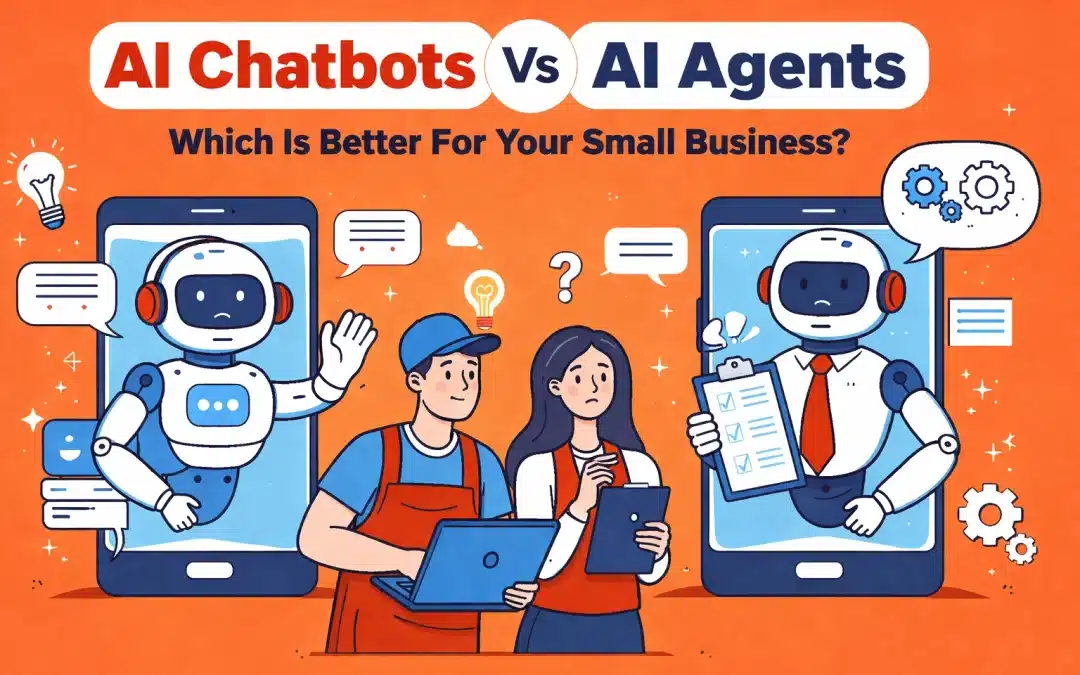
If you've been exploring ways to automate customer interactions or streamline operations, you've probably come across two terms: AI chatbots and AI agents. They sound similar, and many people use them interchangeably. But here's the thing, they're not the same, and choosing the wrong one could mean wasting money on a tool that doesn't actually solve your problems.
For small and midsize business owners, understanding the difference isn't just a technical exercise. It's about making a smart investment that delivers real results. Let's break down what each technology does, where they shine, and which one makes sense for your business.
What Is an AI Chatbot?
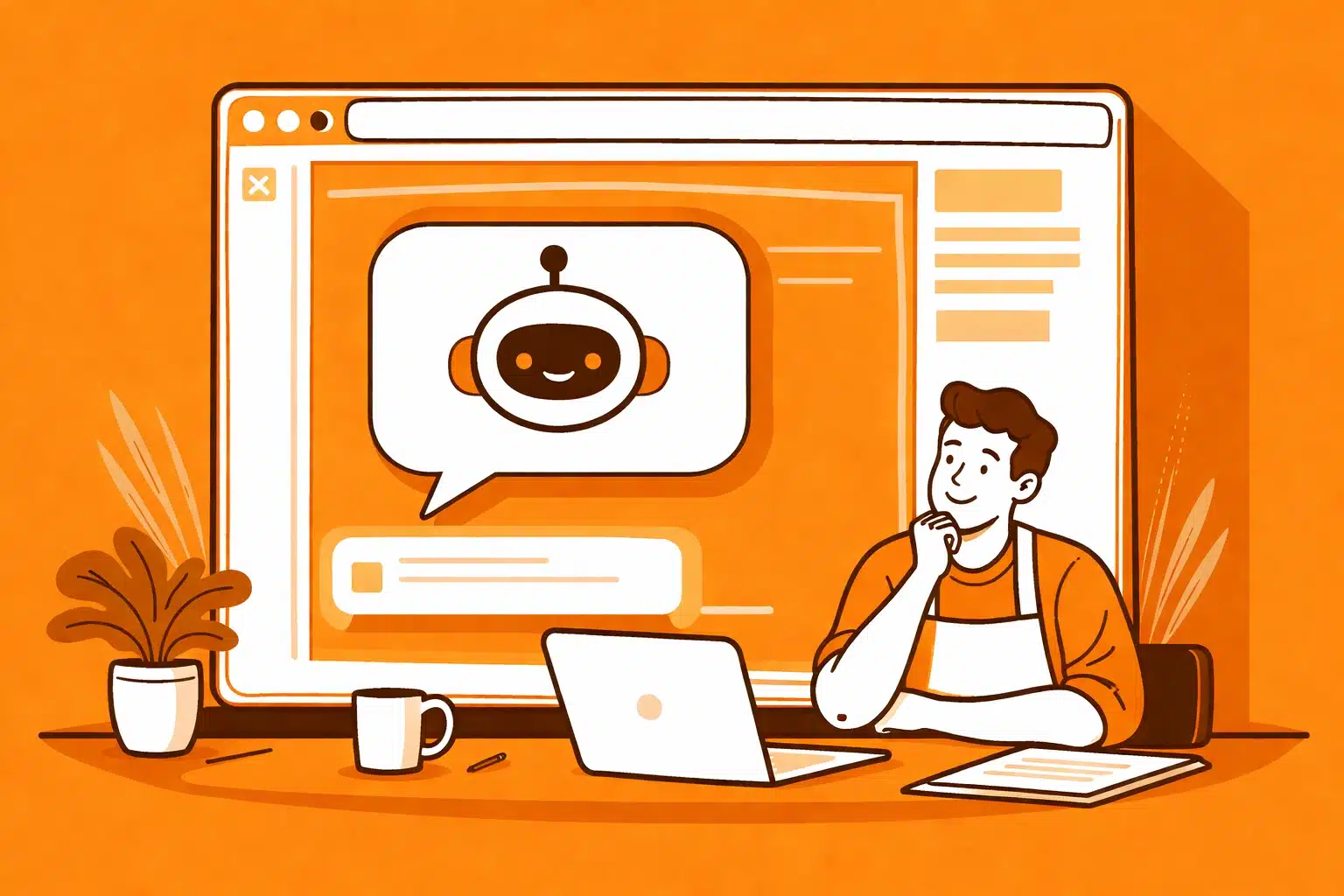
AI chatbots are the technology most people think of when they hear "automated customer service." These are the pop-up windows on websites that greet you with "Hi! How can I help you today?"
Most traditional chatbots are rule-based systems. They follow pre-programmed scripts and are designed to recognize keywords in your questions, then trigger matching responses. Think of them as a sophisticated FAQ system that can hold a basic conversation.
What Chatbots Do Well
- Answer common questions: Store hours, shipping policies, pricing information, return procedures
- Route inquiries: Direct customers to the right department or team member
- Provide instant responses: Handle high volumes of simple requests 24/7
- Reduce support tickets: Deflect repetitive questions away from your human staff
Chatbots are fast, consistent, and scalable. They excel at handling the same types of questions over and over without getting tired or making mistakes. For businesses drowning in repetitive customer inquiries, a well-designed chatbot can be a lifesaver.
The Limitations
Here's where chatbots fall short: they can only do what they're programmed to do. Ask a question outside their script, and you'll get the dreaded "I'm sorry, I didn't understand that. Can you rephrase?" response.
Chatbots don't learn from conversations. They don't adapt to new situations. And they definitely can't take action on your behalf: they just provide information and hope you figure out the next step yourself.
What Is an AI Agent?
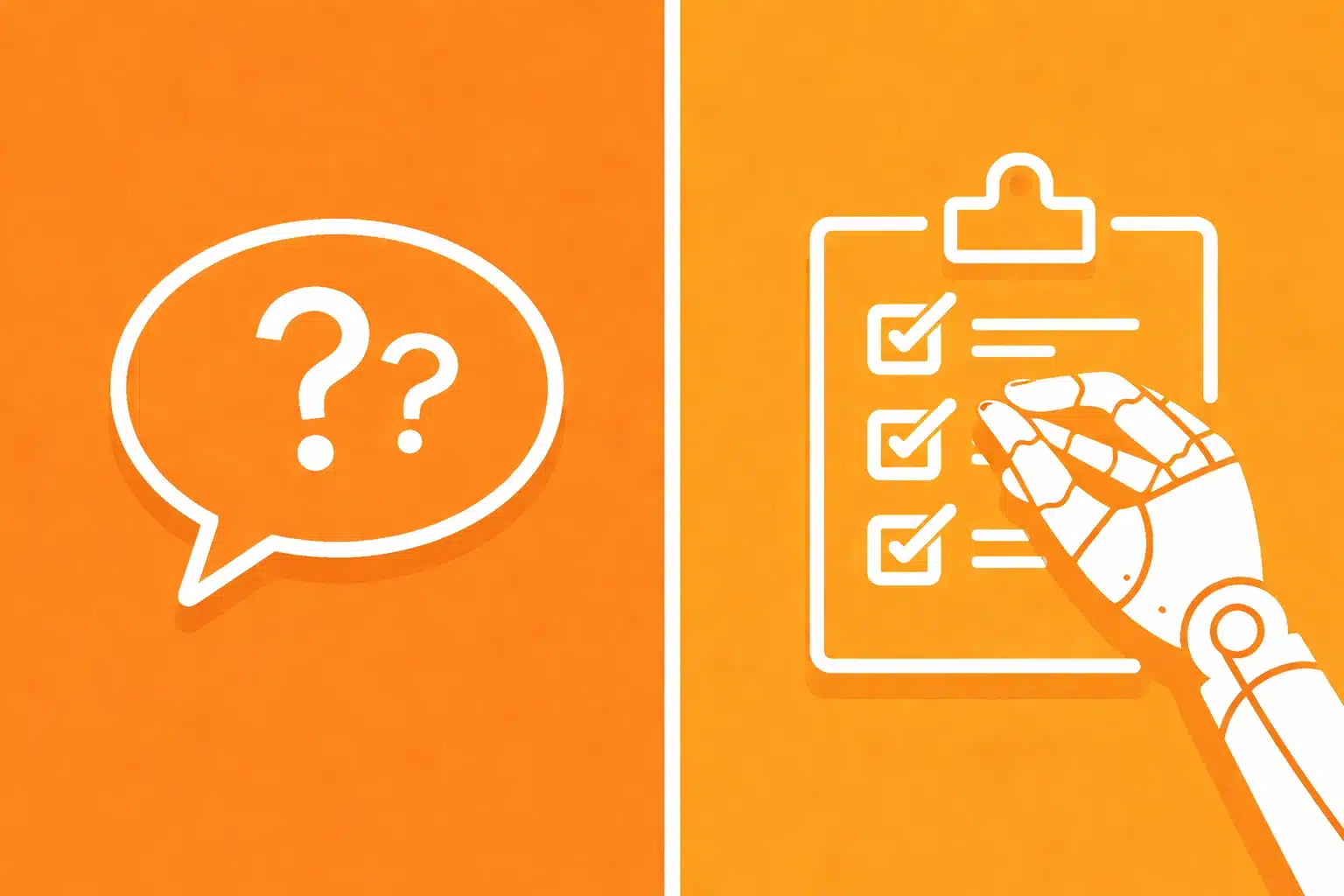
AI agents represent the next evolution in business automation. Unlike chatbots that simply respond to questions, AI agents can actually complete tasks autonomously.
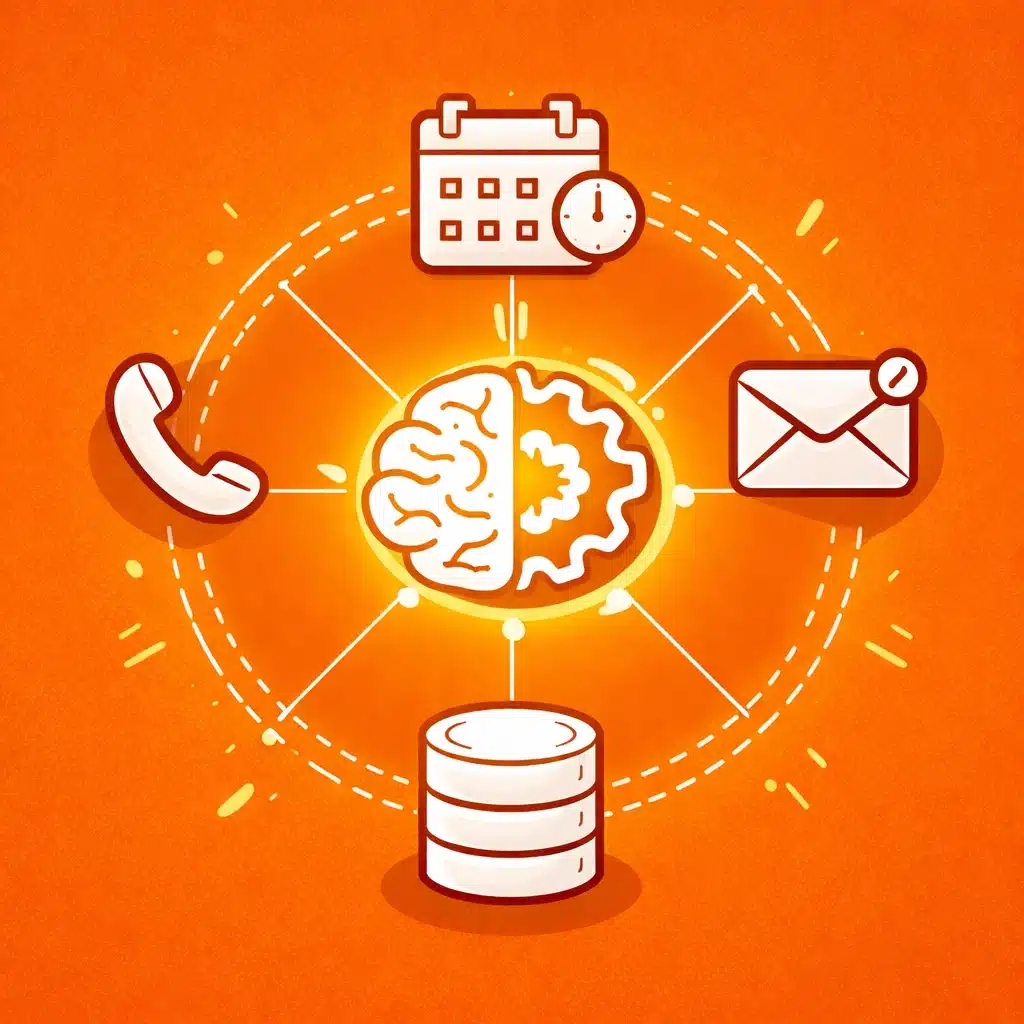
Think of the difference this way: a chatbot tells you how to schedule an appointment. An AI agent schedules the appointment for you: checking your calendar, finding available slots, sending confirmations, and updating your CRM, all without human intervention.
What AI Agents Do Well
- Execute multi-step workflows: Complete entire processes across multiple systems
- Make context-aware decisions: Analyze real-time data and adapt to changing situations
- Integrate across platforms: Connect your CRM, calendar, email, and other tools simultaneously
- Qualify and nurture leads: Engage prospects, gather information, and move them through your sales pipeline
- Handle complex requests: Resolve issues end-to-end rather than just answering questions
AI agents don't just respond: they resolve. They take ownership of a task and see it through to completion, much like a capable employee would.
The Investment
AI agents require more upfront planning and integration work than basic chatbots. They need to connect with your existing systems, understand your business processes, and be configured to make appropriate decisions. However, when implemented correctly, they can eliminate entire categories of manual work.
The Key Differences at a Glance
| Feature | AI Chatbot | AI Agent |
|---|---|---|
| Primary function | Answers questions | Completes tasks |
| Decision making | Follows scripts | Makes contextual decisions |
| System integration | Limited | Connects multiple platforms |
| Learning ability | Minimal | Adapts and improves |
| Best for | FAQs, routing, information | Workflows, automation, operations |
| Implementation | Faster, simpler | More complex, higher ROI |
When Should You Choose a Chatbot?
Chatbots remain an excellent choice for many small businesses, particularly those just starting with automation. Consider a chatbot if:
You need quick wins. Chatbots can be deployed relatively quickly with minimal technical complexity. If you're getting hammered with the same five questions every day, a chatbot can start deflecting those inquiries within weeks.
Your budget is limited. Basic chatbot solutions have a lower entry point, making them accessible for businesses testing the automation waters.
Your needs are straightforward. If most customer interactions involve providing information rather than taking action, a chatbot handles that efficiently.
You want to qualify leads at scale. Chatbots can ask initial qualifying questions and route promising prospects to your sales team, saving time on unqualified leads.
A local service business that receives dozens of calls asking "What are your hours?" or "Do you serve my area?" would benefit immediately from a simple chatbot that handles these questions automatically.
When Should You Choose an AI Agent?
AI agents deliver significantly higher returns when your business handles complex, interconnected workflows. Industry data shows enterprises implementing AI agents report 3–5x higher ROI compared to traditional chatbots. Consider an AI agent if:
You're losing deals to slow response times. AI agents can engage leads instantly, qualify them through intelligent conversation, and schedule appointments: all before a competitor even returns the call.
Manual tasks are eating your time. If your team spends hours on repetitive processes like appointment scheduling, follow-up sequences, or data entry, an AI agent can take over those workflows entirely.
You need integration across systems. AI agents shine when they can connect your calendar, CRM, email marketing platform, and other tools to complete tasks seamlessly.
You want to scale without hiring. For small businesses with limited staff, agents reduce the burden on your team by handling tasks end-to-end rather than just answering questions.
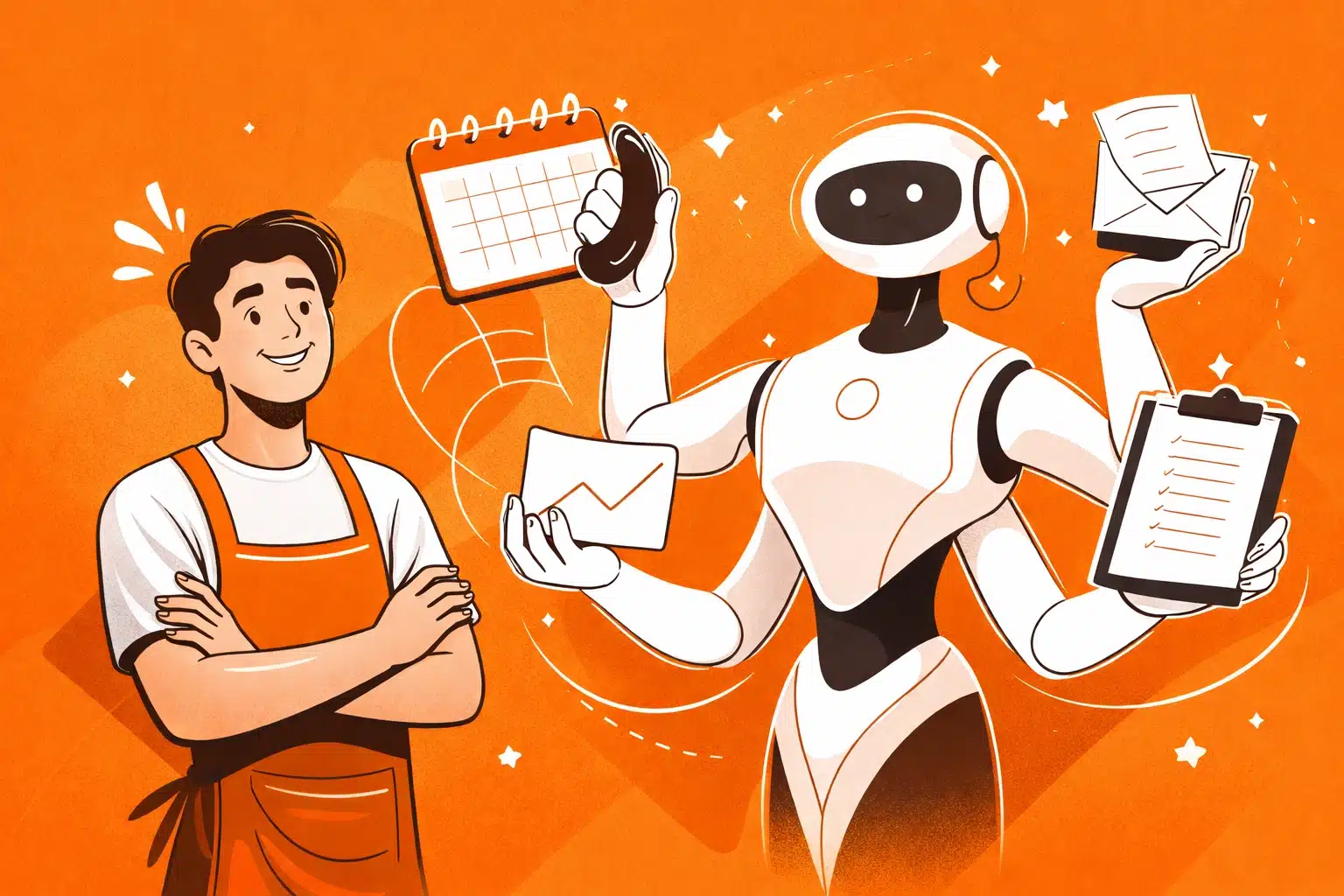
A growing home services company, for example, might use an AI agent that answers incoming calls, qualifies the lead by asking about the project scope, checks technician availability, books the appointment, sends a confirmation email, and creates a record in the CRM: all in one conversation, with zero human involvement.
The Hybrid Approach: Start Small, Scale Smart
Here's a practical strategy many successful small businesses follow: start with chatbots for customer-facing questions, then add agents for back-office operations as you grow.
This approach lets you capture immediate value from automation while building toward more sophisticated solutions. You'll learn what works, identify your biggest time-wasters, and make informed decisions about where AI agents can deliver the most impact.
For example, you might deploy a chatbot on your website to handle initial inquiries and FAQs. Once that's running smoothly, you introduce an AI agent to manage appointment scheduling and lead follow-up. Over time, you expand the agent's capabilities to include more complex workflows.
Making the Right Choice for Your Business
The best choice depends on your specific situation. Ask yourself:
- What problems am I trying to solve? Information delivery or task completion?
- How complex are my customer interactions? Simple Q&A or multi-step processes?
- What's my budget and timeline? Quick deployment or longer-term investment?
- Where is my team spending the most time? Answering questions or executing workflows?
The fundamental question isn't which technology is "better": it's which technology solves your actual problem.
How Web ABCs Can Help
At Web ABCs, we specialize in designing and developing both AI chatbots and AI agents tailored to small and midsize businesses. We don't believe in one-size-fits-all solutions. Instead, we work with you to understand your workflows, identify automation opportunities, and build tools that deliver measurable ROI.
Whether you need a straightforward chatbot to handle customer inquiries or a sophisticated AI agent to automate your lead qualification and scheduling processes, we can help you implement the right solution for your business goals.
Ready to explore what AI automation can do for your business? Give us a call at 703-864-2599 or schedule a free consultation to discuss your needs. We'd love to help you work smarter, not harder.

