
Ready to level the playing field? Contact webABCs at (703) 864-2599 for your AI strategy consultation.
You’re tired of watching big corporations dominate your market with seemingly unlimited resources while you’re stuck fighting for scraps. Every day, you see Amazon, Walmart, and other giants crushing smaller players with their massive teams, deep pockets, and sophisticated technology. But here’s what might surprise you: 2026 is shaping up to be the year that David finally gets a real shot at Goliath, and artificial intelligence is the slingshot.
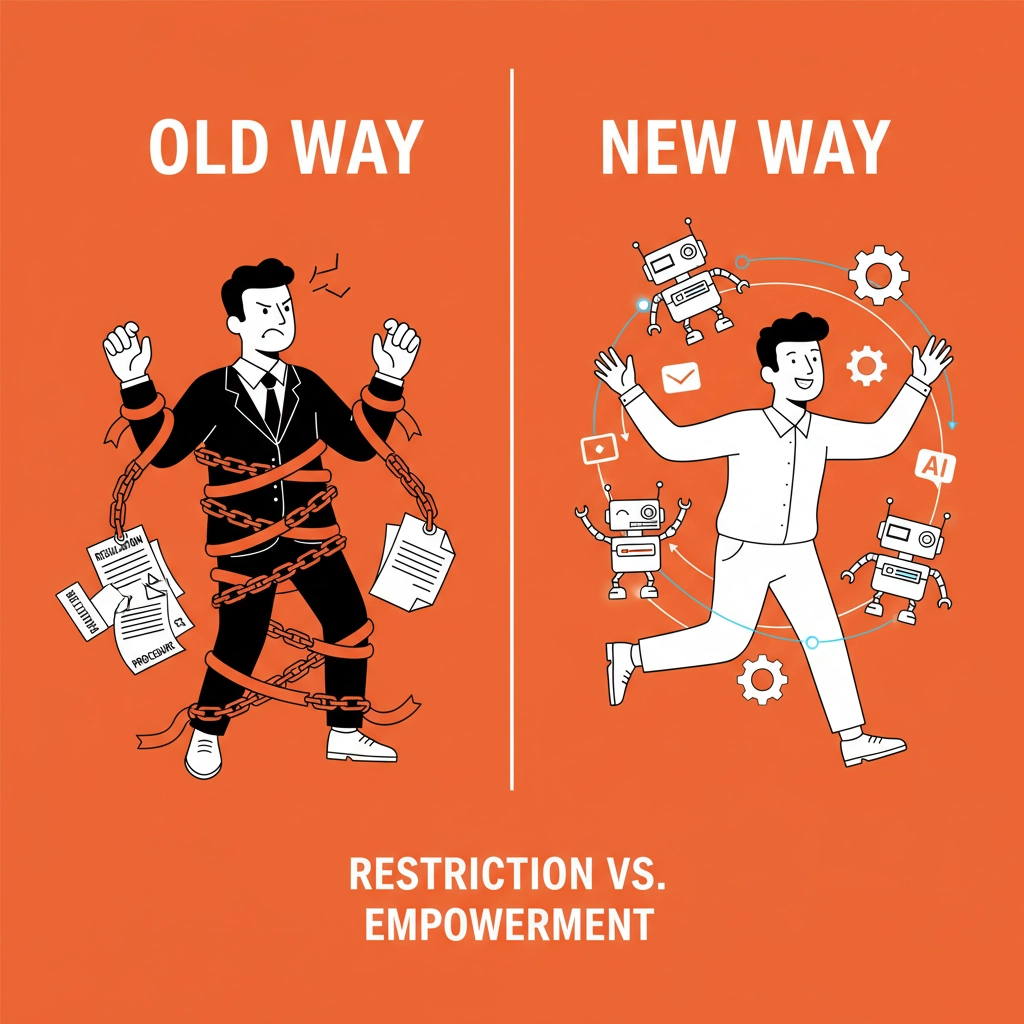
The playing field isn’t just leveling; it’s actually tilting in your favor. While corporate giants are drowning in bureaucracy and legacy systems, you have something they desperately wish they could recapture: agility.
The AI Revolution Is Already Here (And You’re Not Too Late)
Forget everything you think you know about AI being only for tech companies with million-dollar budgets. The landscape has completely transformed. Right now, over 90% of small businesses are already using at least one AI tool, a massive jump from just 60% who weren’t using any AI previously.
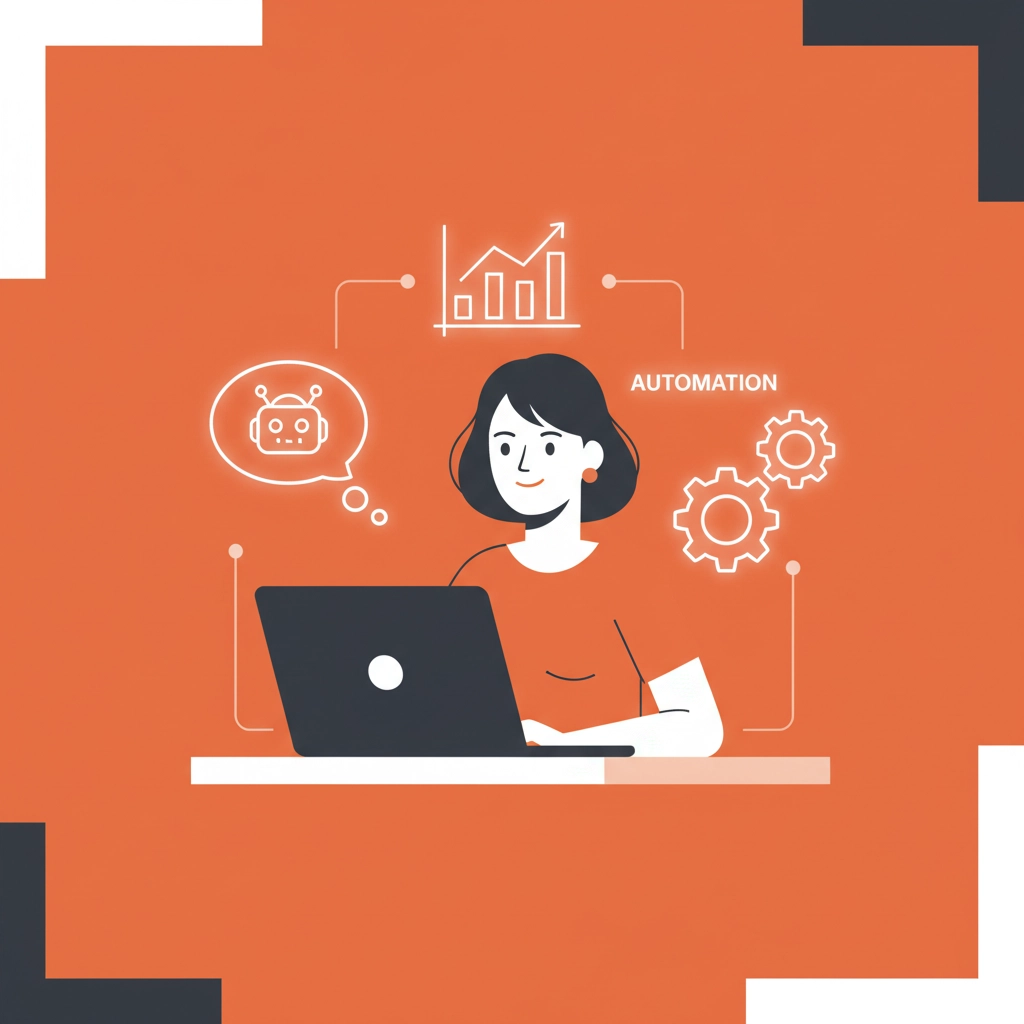
This isn’t some distant future scenario. Your competitors down the street are probably already leveraging AI to automate their customer service, optimize their marketing campaigns, and streamline their operations. The question isn’t whether AI will impact your industry, it’s whether you’ll be leading the charge or playing catch-up.
Why Small Businesses Are Actually Winning the AI Race
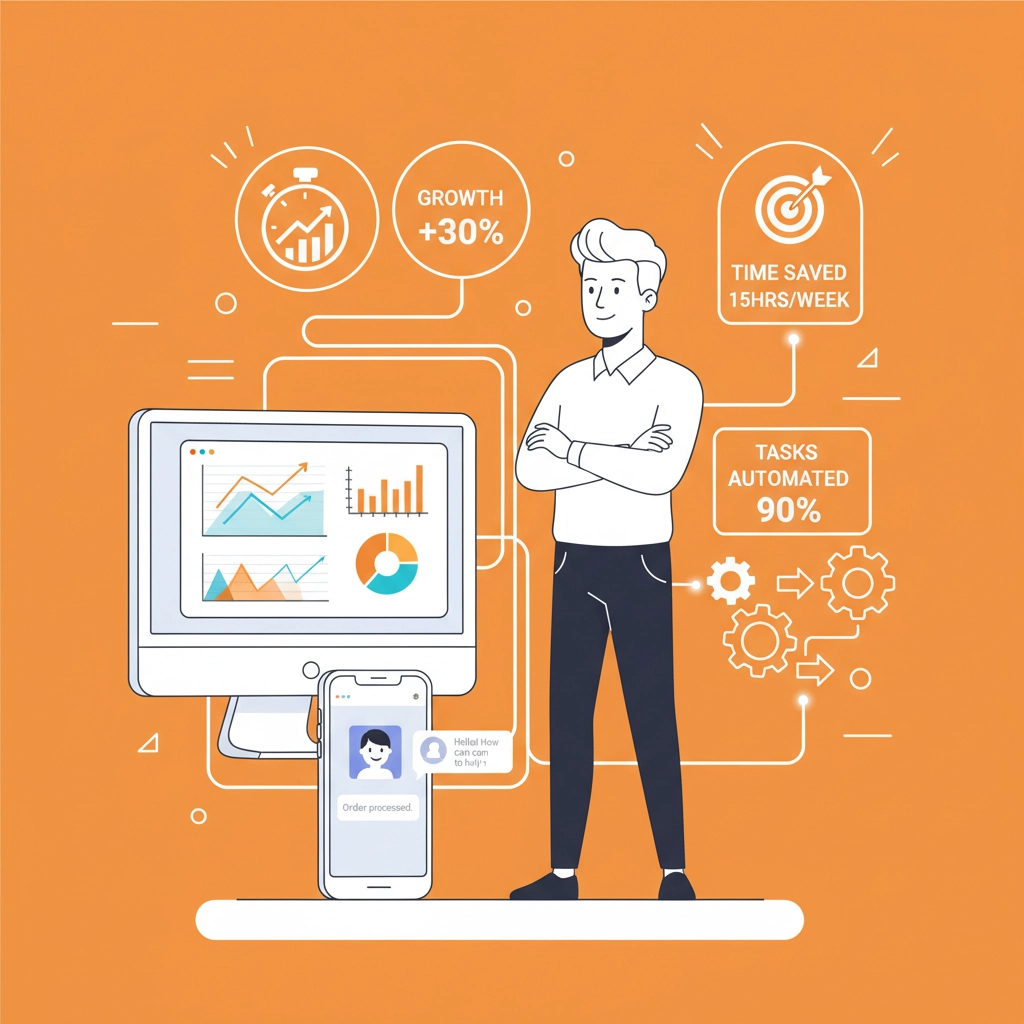
Here’s where it gets interesting: small businesses are reporting results that would make Fortune 500 CEOs jealous. Companies using AI are seeing 85% increased sales, 84% profit growth, and 82% increased productivity. These aren’t marginal improvements, we’re talking about business transformation that happens in months, not years.
The return on investment? For every dollar you spend on AI solutions, you’re looking at approximately $3.50 to $4.00 back in your pocket. When was the last time you saw an investment opportunity with that kind of immediate payback?
But here’s the real kicker: 58% of small businesses using AI are saving over 20 hours per month, while 66% are cutting costs by $500 to $2,000 monthly. That’s not just efficiency, that’s found money that goes straight to your bottom line.
The Corporate Disadvantage (Yes, It’s Real)
While you’re reading this and potentially making decisions about AI implementation this week, your giant competitors are stuck in committee meetings. Large corporations have to navigate:
- Legacy system integration nightmares that take months to resolve
- Approval processes that require sign-offs from multiple departments
- Risk-averse cultures where innovation moves at a snail’s pace
- Complex hierarchies that slow down decision-making
Only 57% of business units at large companies report being ready to adopt new AI applications. Think about that: nearly half of big business divisions are essentially paralyzed by their own size and complexity.
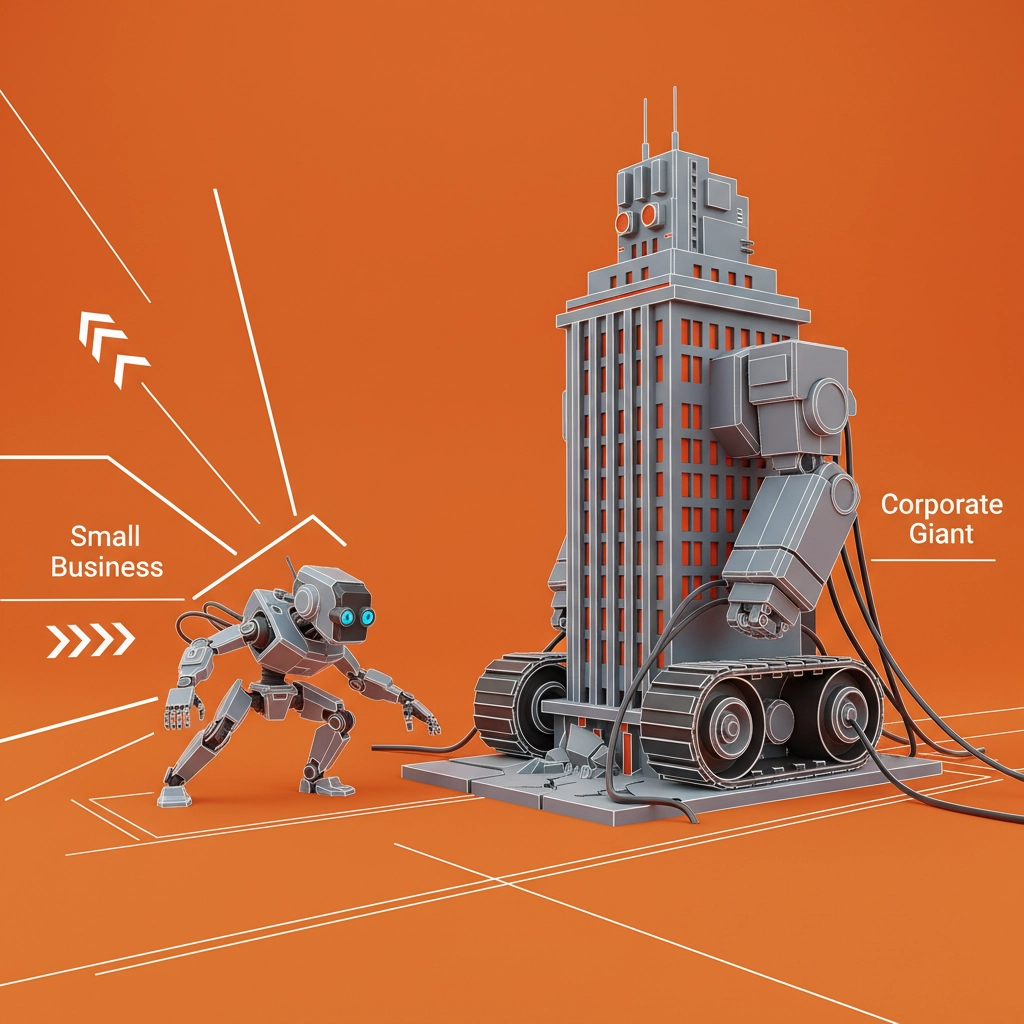
You, on the other hand, can test an AI chatbot this afternoon, implement automated email marketing by next week, and have predictive analytics running by month’s end. Speed matters, and you’ve got it in spades.
Where Smart Small Businesses Are Making Their Move
The most successful small businesses aren’t trying to compete on every front: they’re getting surgical with their AI implementation. Here’s where you should focus your efforts:
Data Analysis (62% of small businesses are already here): You’re swimming in customer data, but you probably don’t have a full-time analyst to make sense of it all. AI can spot patterns in your sales data, customer behavior, and market trends that would take a human analyst weeks to uncover.
Content Generation (55% are using this): Whether it’s social media posts, product descriptions, or email campaigns, AI can help you maintain a consistent content pipeline without hiring an entire marketing team.
Customer Engagement (46% have implemented this): AI chatbots and virtual assistants can handle routine customer inquiries 24/7, letting you focus on high-value interactions while never missing a potential sale.
The Workforce Multiplication Effect
Here’s something that might surprise you: more than 80% of small businesses using AI report that it’s actually helped them expand their workforce, not shrink it. Instead of replacing employees, smart business owners are using AI to multiply their team’s capabilities.
Think of it this way: when your customer service rep isn’t spending three hours a day answering “What are your hours?” and “Where are you located?”, they can focus on solving complex problems and building relationships. When your marketing person isn’t manually scheduling social media posts, they can develop creative campaigns that drive real results.
Real-World Applications That Drive Results
Let’s get specific about what this looks like in practice. One small e-commerce business implemented AI-driven personalization and achieved conversion rates 3x the industry average with a 4x increase in customer lifetime value. They didn’t have a team of data scientists: they used accessible AI tools to deliver Amazon-level personalization.
Another local service business started using AI for predictive maintenance scheduling, reducing their emergency calls by 40% while increasing customer satisfaction scores. Their secret? They could predict problems before customers even knew they had them.
40% of small businesses are already using generative AI for marketing, content creation, and customer service. These aren’t experimental side projects: they’re core business functions driving real revenue.
The 2026 Tipping Point
Why is 2026 the magic year? Several factors are converging:
Technology Maturity: AI tools have moved beyond the experimental phase. They’re reliable, affordable, and user-friendly enough for non-technical business owners to implement successfully.
Market Recognition: 78% of small business owners now believe AI is necessary to compete: not helpful, but necessary. This represents a fundamental shift in business thinking.
Economic Pressure: With inflation, labor costs, and supply chain challenges continuing, businesses need efficiency gains to maintain profitability. AI provides those gains at a scale that was impossible just two years ago.
Competitive Advantage Window: Early adopters are still capturing significant market advantages. But this window is closing fast as AI adoption becomes mainstream.
Overcoming the Common Objections
“It’s too expensive.” The barrier to entry has never been lower. Many AI tools offer free tiers or monthly subscriptions under $100. Compare that to hiring another employee at $40,000+ annually.
“It’s too complicated.” Today’s AI tools are designed for business owners, not programmers. If you can use a smartphone, you can implement business AI.
“My customers won’t like it.” Your customers want faster service, better experiences, and personalized attention. AI helps you deliver all three.
“I don’t have time to learn.” The businesses that don’t make time for AI implementation in 2026 will be making time to figure out why they’re losing market share in 2027.
Your Next Steps (Because Waiting Isn’t a Strategy)
The global AI-enabled business market is projected to deliver $140–160 billion in revenue by 2026, and small businesses are capturing an increasingly large share of that pie. Every month you wait is a month your competitors are gaining ground.
Start with one area: maybe customer service automation or content generation. Get comfortable with the technology, measure the results, then expand. The key is starting now while the competitive advantage is still available.
Your giant competitors are still in planning meetings while you could be implementing solutions this week. Their bureaucracy is your opportunity. Their slow decision-making process is your competitive advantage.
The Bottom Line
2026 isn’t just another year: it’s the inflection point where small business agility trumps corporate resources. The tools are available, the results are proven, and the window of opportunity is wide open.

The question isn’t whether AI will transform your industry. It’s whether you’ll be leading that transformation or scrambling to catch up. The giants are coming, but they’re moving slowly. You have the speed advantage: use it.
Ready to turn your small business into a giant-killer? Contact webABCs at 703 864-2599 or visit our AI consultation page to discover how AI can transform your business in 2026. Don’t wait until your competitors have already captured your market share.

