by George Stark | Mar 25, 2026 | AI

The landscape of small business management has shifted dramatically as we move through March 2026. We are no longer talking about “AI tools” that help you write an email or generate a basic image. We are now firmly in the era of the autonomous AI employee. For small business owners, this shift represents the greatest leveling of the playing field in history. At Web ABCs LLC, we have seen firsthand how these digital team members allow a three-person shop to operate with the efficiency and output of a Fortune 500 department.
Through our partnership with Marblism, we are helping founders move beyond manual labor and into true strategic oversight. Marblism isn’t just a software suite; it is a workforce of specialized AI agents designed to handle the heavy lifting of daily operations. If you are still trying to do everything yourself, you aren’t just working hard: you are falling behind. Here are the six AI employees your business needs right now to stay competitive and how you can deploy them today.
1. The AI Customer Success Specialist
Customer expectations in 2026 are at an all-time high. Consumers no longer accept a “we will get back to you in 24 hours” response. They expect instant, accurate, and empathetic resolutions. The Marblism Customer Success AI acts as your front-line support, but it goes far beyond the chatbots of years past. This agent has full access to your knowledge base, past customer interactions, and product technicalities.
It can handle complex troubleshooting, process returns, and even upsell customers based on their specific needs and history. Because it learns with every interaction, it becomes more attuned to your brand’s unique voice every day. By delegating these tasks, your human staff can focus on high-value relationship building and complex problem-solving that requires a human touch. Learn more about our voice and support AI solutions to see how this fits your model.
2. The AI Sales Development Representative (SDR)
Sales is often the biggest bottleneck for small businesses. There is never enough time to prospect, qualify, and follow up effectively. The AI SDR from Marblism solves this by working 24/7 to identify leads, scrape relevant data, and initiate personalized outreach. This isn’t “spammy” automation; it is hyper-personalized communication that references specific pain points and industry trends relevant to the prospect.
Once a lead is qualified, the AI SDR doesn’t just pass a name to you: it books the meeting directly onto your calendar. It handles the back-and-forth of scheduling, sends reminders, and provides you with a comprehensive briefing before you ever jump on the call. This ensures your sales team is only talking to “warm” prospects who are ready to buy.

3. The AI Marketing Strategist & Content Creator
Content is still king, but the volume required to stay relevant in 2026 is staggering. You need blog posts, social media updates, email newsletters, and video scripts. The Marblism Marketing AI employee functions as a full-service creative agency. It analyzes your market, looks at what your competitors are doing, and develops a multi-channel content strategy that aligns with your business goals.
At Web ABCs LLC, we integrate these AI agents to ensure that every piece of content is optimized for SEO and brand consistency. Whether it’s drafting a 1,500-word deep dive or managing your daily LinkedIn presence, this AI employee ensures your brand remains visible without requiring you to spend hours behind a keyboard. You can explore our marketing materials to see the types of assets these agents can help produce.
4. The AI Financial Operations Manager
Most small business owners dread the “back office” work. Tracking expenses, reconciling accounts, and chasing down unpaid invoices is a drain on energy. The Financial Operations AI from Marblism acts as a proactive controller for your business. It monitors your cash flow in real-time, alerts you to anomalies, and automates the entire accounts receivable process.
In 2026, this agent also assists with predictive budgeting. By analyzing your historical spend and current market trends, it can provide remarkably accurate forecasts of where your finances will be in six months. This allows you to make data-driven decisions about hiring or expansion with confidence, rather than relying on gut feeling. If you’re concerned about your current financial tech stack, consider our free audit to see where you stand.

5. The AI Inventory & Supply Chain Coordinator
For businesses dealing with physical goods, the Marblism Inventory AI is a game-changer. It eliminates the “out of stock” or “overstock” scenarios that kill margins. This agent monitors stock levels across all your channels and automatically places orders with your suppliers based on lead times and predicted demand.
It even negotiates with supplier AI agents to find the best pricing or faster shipping options. In a world where supply chains can be volatile, having an autonomous agent that monitors global logistics 24/7 gives you a massive competitive advantage. It ensures that your capital isn’t tied up in stagnant inventory while ensuring you never miss a sale due to a stockout.
6. The AI Human Resources & Recruitment Assistant
Hiring is expensive and time-consuming. The AI HR Assistant handles the entire top-of-funnel recruitment process. It writes job descriptions, posts them to relevant boards, and screens hundreds of resumes in seconds based on specific skill sets and cultural fit indicators. It can even conduct initial text-based or voice-based screenings to narrow down the pool to the top three candidates for you to interview.
Beyond hiring, this agent manages employee onboarding, tracks certifications, and handles routine HR inquiries from your team. This ensures that as your business grows, the “people” side of the company remains organized and compliant without needing a massive HR department. Meet our actual human experts on our team page to see how we balance this technology with human oversight.
Why the “AI Employee” Model Wins
The traditional model of hiring a generalist and hoping they can handle ten different tasks is dead. In 2026, the winning strategy is to deploy specialized AI agents for the “doing” and keep humans for the “deciding.” This model offers three distinct advantages:
Infinite Scalability: Your AI SDR doesn’t get tired. It can handle 10 leads or 10,000 leads with the same level of precision. When your business grows, you don’t need to find more office space; you simply increase the compute power of your agents.
Cost Efficiency: Hiring a full-time content creator, SDR, and bookkeeper could easily cost a small business $200,000+ per year in salary and benefits. Marblism’s AI employees provide the same functional output at a fraction of that cost, allowing you to reinvest that capital back into growth.
Data-Driven Consistency: Humans have bad days. AI doesn’t. Your AI Customer Success agent will be just as polite and helpful at 3:00 AM on a Sunday as it is at 10:00 AM on a Tuesday. This level of consistency builds deep trust with your customer base.
How to Start Using Marblism AI Employees Today
At Web ABCs LLC, we specialize in the implementation and management of these AI solutions. You don’t need to be a prompt engineer or a computer scientist to get started. Our process is designed to be plug-and-play for the busy founder.
First, we conduct an operational audit to see which areas of your business are currently the biggest “time-sinks.” Then, we select the Marblism agents that will provide the highest ROI. We handle the integration with your existing tools: like your CRM, email, and website: ensuring a seamless transition. For more information on our specific services, you can visit our dedicated Marblism page.
Take the Next Step Toward an AI-Powered Future
The gap between the “haves” and “have-nots” in the small business world is no longer about who has the most funding. It is about who has the best systems. By embracing the AI employee model through Marblism and Web ABCs LLC, you are choosing to work on your business rather than in it.
Don’t wait until your competitors have already automated their way to the top. The technology is here, it is proven, and it is ready to work for you. If you are ready to reclaim your time and scale your business with the power of Marblism, we are ready to help.
Contact us today at 703-864-2599 to discuss your AI workforce strategy, or book a session directly on our consultation calendar. Let’s build the future of your business together.
For more insights on the latest in marketing technology and AI, feel free to browse our blog or check our FAQ section for common questions regarding AI integration.

by George Stark | Mar 25, 2026 | AI
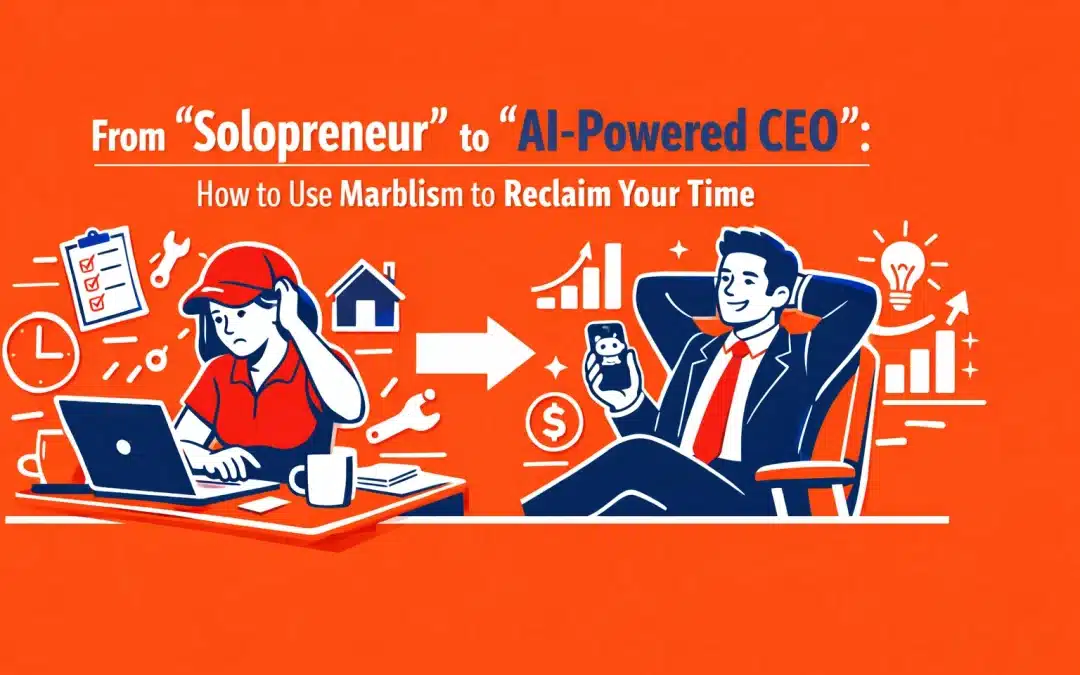
Every solopreneur starts their journey with a dream of freedom: freedom to choose their projects, freedom to set their schedule, and freedom to build something meaningful. But as the business grows, that dream often turns into a 60-hour-a-week grind. Instead of being the visionary CEO, you find yourself acting as the customer support rep, the social media manager, the data entry clerk, and the technical troubleshooter all at once.
This is the “Solopreneur Trap.” It’s the stage where your business is too large for one person to handle comfortably, but perhaps too small or too volatile to justify the overhead of hiring a full-time staff. At Web ABCs LLC, we’ve seen this bottleneck destroy promising startups. That is why we are leading the charge into 2026 by integrating Marblism into our core marketing technology stack. Marblism allows you to stop “doing” everything and start “leading” through the power of AI Employees.
Understanding the AI Employee Revolution
In the past, automation meant simple “if-this-then-that” sequences. Today, Marblism has evolved that concept into full-fledged AI Employees. These aren’t just bots; they are digital team members with defined roles, specialized skills, and the ability to work 24/7 without a coffee break or a vacation request.
When you partner with Web ABCs to deploy Marblism, you aren’t just buying software; you are onboarding a workforce. These AI agents handle the repetitive, high-volume work that consumes your mental energy. By delegating these tasks, you effectively transition from the “worker bee” role into a true CEO position, where your primary focus is strategy, innovation, and high-level growth.
Reclaiming 25+ Hours a Week: Where the Time Goes
The data from early 2026 adopters is staggering. Solopreneurs using Marblism are reporting a reduction in their workweek from 60+ hours to under 35 hours, all while seeing an increase in output. But where exactly does that time come from? Let’s look at the four core pillars of Marblism automation.
1. Radical Email and Communication Management
The average business owner spends upwards of two hours a day in their inbox. Marblism’s AI Employees can manage your inbox by drafting replies, organizing priorities, and even resolving basic customer inquiries before you even wake up. Research shows that this can reduce daily email management from 120 minutes to just 20 minutes of final reviews. That’s nearly 10 hours a week reclaimed right there.
2. Content Creation and Social Media at Scale
Content is the lifeblood of modern marketing, but creating it is exhausting. Marblism automates the ideation, drafting, scheduling, and publishing of blog posts and social media updates. By using AI to generate high-quality drafts based on your brand voice, you can reduce the 9–13 hours usually spent on content weekly down to less than an hour of editorial oversight. For those looking to dominate their niche, this 90% time savings is a game-changer.
3. Automated Lead Generation and Outreach
Prospecting is often the first thing to fall off a busy solopreneur’s plate, yet it’s the most important for growth. Marblism AI Employees work around the clock to identify leads, perform initial outreach, and follow up with prospects. This ensures your sales pipeline stays full without you having to manually send a single “just checking in” email. You can learn more about how we pair this with Voice AI solutions to create a seamless sales funnel.
4. Administrative and Financial Oversight
Monitoring cash flow, categorizing expenses, and generating revenue forecasts can take up significant mental bandwidth. Marblism automates these administrative burdens, providing you with real-time dashboards and summaries so you can make informed decisions in minutes rather than hours.
The Strategic Pivot: What to Do With Your Found Time
The biggest hurdle for most solopreneurs isn’t just finding the time; it’s knowing how to act like a CEO once they have it. When Marblism takes over the “busy work,” your new job description changes. You are no longer the person who sends the emails; you are the person who decides the company’s direction for the next fiscal year.
With an extra 25 hours a week, you can finally focus on:
- Product Innovation: Developing new features or services that solve your customers’ evolving problems.
- Strategic Partnerships: Networking with other industry leaders to create co-marketing opportunities.
- High-Level Sales: Closing the big deals that require a human touch and executive presence.
- Business Development: Analyzing market trends and pivoting your strategy to stay ahead of the competition.
This shift is what separates a “job you own” from a “business that works for you.” By leveraging the AI expertise at Web ABCs LLC, you are effectively buying back your life.
Scaling Without the Growing Pains
Traditionally, scaling meant hiring. Hiring meant recruitment costs, onboarding time, payroll taxes, benefits, and the risk of turnover. For a small business, one bad hire can be a catastrophic financial blow. Marblism eliminates these risks.
An AI Employee doesn’t need a desk, doesn’t get “burnout,” and understands your business logic instantly. When you work with us to implement AI technology, you are building a scalable infrastructure. If your business doubles in size next month, you don’t need to double your staff and your stress: you simply scale your AI capacity. It is the most cost-effective way to grow in the modern economy, often saving founders upwards of $5,000 to $10,000 a month compared to traditional agency fees or full-time salaries.
The Web ABCs Advantage: Implementation Made Easy
We know that “AI” can sound intimidating. You might worry about the learning curve or the technical setup. That’s why Web ABCs LLC doesn’t just hand you a login and wish you luck. Our team provides guided onboarding, account management support, and customized integration to ensure that Marblism fits perfectly into your existing workflow.
Whether you need a custom free audit of your current processes or a full-scale digital transformation, we are here to ensure your transition to an AI-Powered CEO is seamless. We’ve seen a 92% satisfaction rate among clients who have moved to this automated model, citing improved consistency and a massive reduction in operational stress.
Take the First Step Toward Freedom
The era of the “struggling solopreneur” is coming to an end. In 2026, the most successful business owners won’t be the ones who work the hardest; they will be the ones who leverage the best technology. Marblism is that technology, and Web ABCs is your partner in making it happen.
Are you ready to stop being the bottleneck in your own business? Are you ready to reclaim 10, 20, or even 30 hours a week while your revenue continues to climb? It’s time to step into your role as an AI-Powered CEO.
Contact us today to schedule a strategy session. Let’s look at your current workload and identify exactly which AI Employees can start working for you tomorrow. You can reach our team directly at 703-864-2599 or book a time that works for you on our consultation calendar. Your time is your most valuable asset: don’t waste another minute on tasks that an AI could do better.
Explore our full blog for more tips on marketing technology or visit our Marblism page to see the future of small business operations.
by George Stark | Mar 25, 2026 | AI
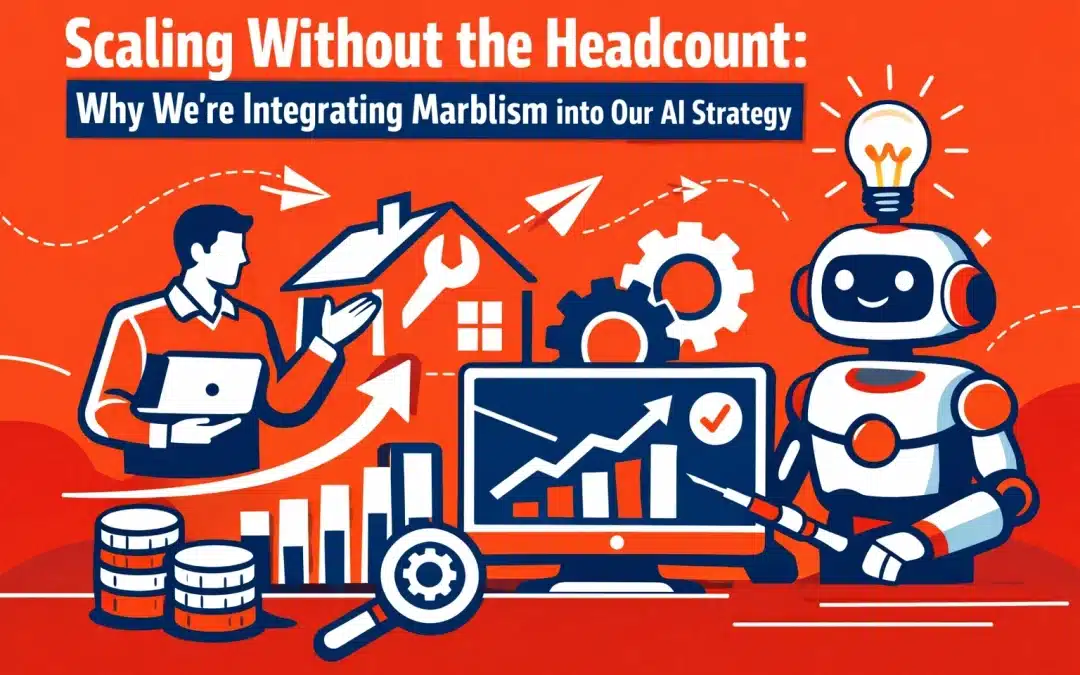
Scaling Without the Headcount: Why We’re Integrating Marblism into Our AI Strategy
For years, the formula for business growth was simple but painful: if you wanted to do more, you had to hire more. Scaling meant more resumes, more interviews, more onboarding, and a significantly larger payroll. However, as we move through 2026, that traditional growth model is being disrupted by a new paradigm. At Web ABCs LLC, we have always been at the forefront of marketing technology, and today we are excited to share a major strategic shift. We are officially integrating Marblism into our core AI strategy to help our clients scale without the traditional headcount.
The challenge for modern small and medium-sized businesses (SMBs) isn’t a lack of opportunity; it’s a lack of bandwidth. Founders and executives are often caught in the “operator trap,” spending 80% of their time on repetitive administrative tasks and only 20% on high-level strategy. Marblism changes that math by introducing the concept of the AI Employee: specialized, autonomous agents that don’t just “help” you work, but actually do the work for you.
The Evolution of the Workforce: From Tools to Agents
In the early 2020s, we saw the rise of AI tools. These were applications where a human would input a prompt, and the AI would provide an output. It was an efficiency boost, certainly, but it still required a human to be the primary driver. In 2026, we have moved into the era of AI Agents. Unlike a standard tool, an AI Agent: or an AI Employee: is designed to handle end-to-end processes independently.
Integrating Marblism into our workflow at Web ABCs LLC allows us to move away from fragmented software subscriptions and toward a unified workforce of digital specialists. Whether it is managing outbound sales, handling initial customer support inquiries, or optimizing SEO content, these agents operate within our existing ecosystems like Gmail, LinkedIn, and Slack. This isn’t just about automation; it’s about delegation.
Why Web ABCs LLC Chose Marblism
As a marketing technology leader, our reputation is built on providing the most effective solutions for our clients. We chose to partner with and integrate Marblism because it addresses the most common friction points in business scaling. Traditional hiring involves high risk, high costs, and significant management time. Marblism mitigates all three.
1. Operational Consistency 24/7
Humans need sleep, vacations, and mental health days. While we value our human team members for their creativity and strategic leadership, routine tasks don’t require human biology. Marblism’s AI employees work 24 hours a day, 7 days a week, 365 days a year. They don’t get burned out, and their performance doesn’t dip on a Friday afternoon. For our clients, this means a level of operational consistency that was previously impossible without a massive global team.
2. Seamless Tool Integration
One of the biggest hurdles in adopting new technology is the learning curve and the integration mess. Marblism’s platform is built to play nice with the tools businesses already use. It connects directly to business email accounts and social media profiles. This allows us to deploy these AI employees on behalf of our clients in less than 30 minutes, creating immediate value without a lengthy development cycle.
3. Significant Cost Efficiency
Hiring a full-time sales assistant or a dedicated SEO writer in 2026 can cost upwards of $60,000 to $80,000 per year when you factor in benefits and overhead. Marblism offers an entire suite of AI employees for a fraction of that cost. This allows SMBs to reinvest those savings into product development, high-level marketing strategy, or expanding their human leadership team.
Redefining Value for Our Clients
By incorporating Marblism into our AI services, Web ABCs LLC is able to offer a more comprehensive growth package. We aren’t just giving you a website or a marketing plan; we are giving you the digital labor force required to execute that plan at scale. This integration allows us to provide even more value in several key areas:
Sales Outreach: Our AI sales agents can scan databases of over 700 million leads, filtering by industry, job title, and location to find the perfect match. They then handle the initial outreach, follow-ups, and even book meetings directly onto your calendar. You only step in when the lead is warm and ready to talk business.
Customer Experience: With AI receptionists and support agents, no lead goes unanswered. Whether it is a late-night inquiry on your website or a weekend phone call, Marblism-powered agents handle the interaction with professional precision, routing complex issues to your human team only when necessary. This ensures you never miss a revenue opportunity due to a missed call.
Content and SEO: In the fast-paced digital world, content is still king, but volume is the challenge. Marblism’s SEO writers produce high-quality, data-driven content that helps our clients dominate search rankings without needing a full-time editorial staff. For more on how we manage this, you can check our latest blog updates.
The Strategic Shift: Scaling Smarter, Not Larger
We often talk to founders who are hesitant to grow because they dread the complexity that comes with a larger team. The “Scaling Without the Headcount” philosophy isn’t about replacing people; it’s about empowering them. When we implement Marblism for a client, their existing team is suddenly freed from the “drudge work.” This leads to higher job satisfaction, less turnover, and more space for innovation.
At Web ABCs LLC, our mission is to simplify the complex world of marketing technology. By bringing Marblism into our ecosystem, we are providing a roadmap for the future of work. It is a future where your business can double or triple in capacity while your core team remains lean, agile, and focused on what truly matters.
How to Get Started with AI Integration
Integrating AI into your business strategy shouldn’t be intimidating. At Web ABCs, we handle the heavy lifting of setup and management, ensuring that your Marblism agents are aligned with your brand voice and business goals. If you are ready to see how an AI employee can transform your operations, we recommend starting with a comprehensive look at your current digital footprint.
You can begin by requesting a free audit to see where your biggest bottlenecks are. Whether it’s missed sales calls, stagnant social media, or a lack of lead follow-up, there is a Marblism agent ready to step in and fill the gap.

Take the Next Step
The landscape of business is changing rapidly. Those who wait to adopt these AI-driven efficiencies will find themselves struggling against competitors who have effectively “cloned” their best employees through automation. Don’t let your growth be limited by your headcount. Let Web ABCs LLC show you how to scale smarter.
If you’re ready to discuss how Marblism can be tailored to your specific needs, we invite you to book a time on our consultation calendar. Alternatively, give us a call at 703-864-2599 to speak with our team about your vision for an AI-powered future. We are here to help you navigate this transition and ensure your business is built for the long haul in this new digital era.
For more information on our specific AI-driven communication solutions, visit our Voice AI for Small Businesses page. Let’s start building your future workforce today.
ID: BLOG-2026-03-21-MARB-STRAT
by George Stark | Mar 25, 2026 | AI
Let’s be honest for a second: running a small business is exhausting. It’s the kind of tired that coffee can’t fix. You started your company because you had a vision: a product to build, a service to provide, or a problem to solve. But somewhere along the way, you became the Chief Everything Officer. You’re the one writing the blog posts, answering the 2:00 PM support tickets, chasing down cold leads, and trying to figure out why the social media algorithm hates you this week.
We’ve all been there. At Web ABCs LLC, we talk to founders every day who are stuck in the “Founder’s Trap.” You’re too big to do everything yourself, but you’re too small to afford a $150,000 payroll for a full-time marketing, sales, and support team. Traditionally, that meant you just worked longer hours and burned out. But it’s 2026, and the game has changed.
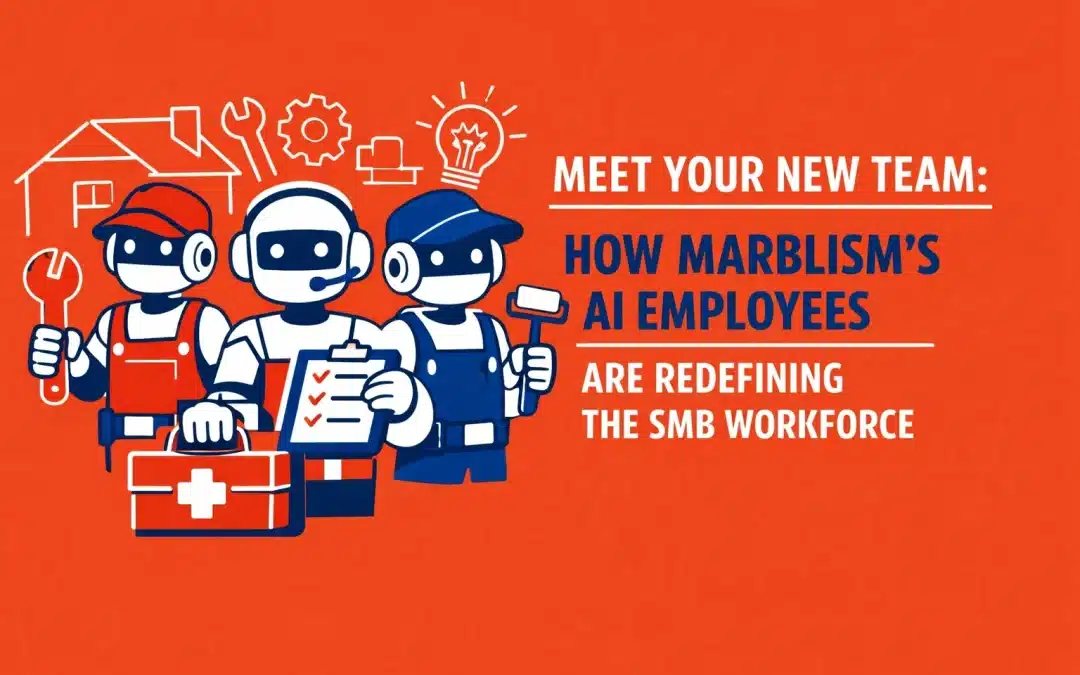
Enter Marblism. We’ve been keeping a close eye on how AI is evolving, and Marblism is doing something that actually moves the needle for SMBs. They aren’t just giving you “tools”: they are giving you AI Employees. And today, I want to walk you through how these digital teammates are helping our clients at Web ABCs out-compete the big guys without hiring a single human staff member.
The End of the ‘Solopreneur’ Struggle
The term “solopreneur” always sounded a bit like a badge of honor, didn’t it? But in reality, it often means you’re a bottleneck. If you get sick, the marketing stops. If you go on vacation, the sales pipeline dries up. You can’t scale a bottleneck.
Marblism changes the math. Instead of trying to find the perfect virtual assistant in a different time zone or hiring a local college intern who might leave in three months, you’re deploying specialized AI agents. These aren’t chatbots that just repeat what you say; these are workers trained for specific business functions. They don’t need coffee breaks, they don’t need health insurance, and they definitely don’t ask for a raise on a Monday morning.
Meet Your Marketing & Content Squad
Most small business owners know they *should* be posting on LinkedIn, Instagram, and their blog. But who has the time? Marblism’s Social Media Manager and SEO Content Writer take that entire weight off your shoulders.
The SEO Content Writer doesn’t just spit out generic text. It understands your business, looks at what’s ranking on Google, and creates long-form content that actually drives traffic. Pair that with the Social Media Manager, which takes those insights and turns them into a week’s worth of posts across all your platforms. It’s consistent, it’s professional, and it keeps your brand “always on” while you’re busy actually running the business. This is exactly why we integrated Marblism into our workflow: it keeps the engine running 24/7.
The Sales Rep That Never Sleeps
Sales is usually the hardest part of scaling. Hiring a salesperson is a huge risk: there’s the base salary, the commission, the training time, and the chance they won’t hit their numbers. Marblism’s Outbound Sales Representative is a total game-changer here.
Imagine a sales rep that has access to a database of 700 million leads. It identifies the right prospects, crafts personalized outreach, handles the follow-ups, and only brings you in when the lead is warm and ready to talk. It’s like having a top-tier SDR (Sales Development Rep) working for you for less than the cost of a gym membership. For our clients at Web ABCs, this is how they are hitting growth numbers that used to require a massive venture capital round.
Operations and Support: The Invisible Glue
Beyond the flashy stuff like sales and marketing, there’s the “admin drain.” Checking emails, scheduling meetings, and answering the same five questions from customers over and over again. This is where Marblism’s Executive Assistant and Customer Support Agent come in.
The Executive Assistant acts as your gatekeeper, managing your calendar and triaging your inbox so you only see what’s important. Meanwhile, the Customer Support Agent lives on your site, answering questions with the nuance of a human but the speed of light. Because these agents “learn” your business once you describe it to them, they provide a level of service that makes your tiny business look like a Fortune 500 company.
The Receptionist: Your AI Voice Front Desk
We’ve talked a lot about voice AI for small businesses before, and Marblism’s Receptionist is a prime example of why this tech is mandatory now. If you’re a local contractor, a lawyer, or a consultant, every missed call is a missed paycheck. The Marblism Receptionist picks up the phone, books appointments directly into your calendar, and handles basic inquiries. No more “I’ll call you back” voicemails that never get returned.
The ROI: A No-Brainer for SMBs
Let’s talk numbers, because at the end of the day, Web ABCs is about helping you out-earn the competition. Hiring a full team: Marketing, Sales, EA, and Support: would easily cost you $20,000 to $30,000 *per month* in salaries and overhead.
With Marblism, you’re looking at a suite of AI employees for around $39 a month. Even if they were only 50% as good as a human (and trust me, in many tasks, they’re actually better), the ROI is astronomical. It moves your “break-even” point significantly lower and allows you to reinvest your profits into things that actually grow the business, like product development or paid ads.
How to Get Started Without the Headache
I know what you might be thinking: “This sounds great, George, but I don’t have time to set up seven different AI bots.” That’s the beauty of Marblism’s approach. You don’t need to be a “prompt engineer” or a tech wizard. You describe your business, set some basic guidelines, and the AI employees take it from there. They are designed to be plug-and-play.
However, we know that integrating these tools into your existing marketing strategy can still feel like a big step. That’s where we come in. At Web ABCs LLC, we specialize in making sure these technologies actually talk to each other and contribute to your bottom line. We aren’t just here to give you more “software”; we’re here to give you a result.
If you’re ready to stop being the “bottleneck” in your own company and want to see how these AI employees can fit into your specific business model, I’d love to chat. You can reach out to our team at 703-864-2599 or, better yet, head over to our Consultation Calendar to book a time that works for you. Let’s look at your current workflow and see which AI employee should be your first “hire.”
The Future of Work is Here (And It’s Affordable)
The barrier to entry for scaling a business has never been lower. In the past, the company with the most money for hiring won. Today, the company with the smartest automation wins. By leveraging Marblism’s AI employees, you aren’t just saving money: you’re buying back your time. And for a founder, time is the only resource you can’t make more of.
Don’t wait until your competitors have an AI sales team and an AI support desk before you decide to act. The “early adopter” window is open right now. Let’s get your new team onboarded and start growing. If you have questions about how this specifically works with your industry, check out our FAQs or give us a call at 703-864-2599. We’re excited to help you build the next version of your business.
Stay tuned for more updates next week as we dive deeper into each of these roles and show you exactly how to put them to work!
by George Stark | Mar 18, 2026 | AI
Let’s be real for a second. It’s Sunday, March 15th, 2026. You wake up, and you don’t "Google" things the way you used to back in 2022. You probably ask your AI agent, whether it’s ChatGPT, Gemini, or a specialized voice assistant, to find you the best Italian spot in town or a reliable plumber who can show up before noon.
So, as a business owner, you might be thinking: “Do Google Reviews even matter anymore? If people are just talking to bots, is my 4.8-star rating just a relic of a bygone era?”
I get it. The landscape has shifted faster than a caffeine-fueled developer on a deadline. But here’s the kicker: Google Reviews matter more now than they ever did.
Wait, don’t roll your eyes just yet. I’m not just saying that because we’re a marketing tech company. I’m saying it because the AI "Answer Engines" that have replaced traditional search bars are hungrier for your customer reviews than Google ever was.
In this post, we’re going to dive into why your google reviews for small business are the secret fuel for the AI revolution and how local SEO 2026 is actually just a game of who has the most authentic human fans.
The Rise of the Answer Engine
Back in the day, SEO was about keywords, backlinking, and hoping Google’s "spiders" liked your site structure. Today, we live in the world of AEO, Answer Engine Optimization. When you ask an AI agent a question, it doesn’t just give you a list of links; it gives you a definitive answer.
But where does that answer come from?
AI agents like ChatGPT and Perplexity don’t just "know" things. They are trained on massive datasets, and for local businesses, their primary source of "truth" is the review section. When an AI is trying to decide if Web ABCs LLC is better than the "Other Guy," it looks at the sentiment, the frequency, and the specific keywords tucked inside your customer feedback.
If your reviews mention that you have "the best customer service in Virginia" or that you "helped with AI integration seamlessly," the AI marks those as facts. In 2026, your reviews aren’t just feedback; they are the structured data that tells an AI what your business actually does. Without a healthy stream of reviews, you’re basically invisible to the bots.
The Trust Deficit: Why Humans Still Beat Algorithms
Here’s a fascinating stat from our recent research: roughly 53% of consumers in 2026 actually distrust AI-generated search results if they can’t see the "human" evidence behind them. We’ve reached a point where we know AI can be manipulated, but a genuine, rambling, slightly misspelled review from "Brenda in Arlington"? That’s gold.
This is where AI search and reviews collide. People use AI for speed, but they use reviews for safety. We want the bot to narrow down the choices, but we want our fellow humans to give the final "okay."
For a small business, this is your superpower. Big corporate brands can spend millions on AI-optimized ad copy, but they can’t fake the genuine connection you have with your local clients. Every time a customer leaves a review, they are providing "Social Proof" that no algorithm can manufacture.
How Google Reviews Influence Your Ranking in 2026
You might think Google is losing the war to AI, but Google is AI. Gemini (Google’s AI) is deeply integrated into the search experience. If you want to show up in the "Local Pack" or be the top recommendation when someone asks their phone for a service, you need to hit three specific markers:
1. Relevancy (The "What")
It’s no longer enough to have someone say "Great job!" AI looks for keywords. If a customer writes, "They really helped me with my local SEO 2026 strategy," Google sees that as a high-relevancy signal. Encourage your customers to mention exactly what you did for them.
2. Quantity (The "Crowd")
AI systems tend to favor businesses that have a "critical mass" of reviews. Research suggests that hitting 20+ recent five-star ratings is the tipping point where AI agents start recommending you over competitors who might be closer geographically but have fewer reviews.
3. Recency (The "Now")
A five-star review from 2023 is ancient history. In 2026, the "half-life" of a review is shorter than ever. If you haven't received a review in the last 30 days, the AI assumes you might have gone out of business or that your quality has dipped.
Using Reviews to Out-Compete the Big Brands
This is the part I love. For years, small businesses felt like they were fighting an uphill battle against big-box stores with massive marketing budgets. But the shift to AI search has leveled the playing field, if you know how to play.
A massive corporation might have 10,000 reviews, but if their recent sentiment is "long wait times" and "automated phone menus," the AI is going to notice. If your small business has 150 reviews that say "they answered the phone on the first ring" and "they treated me like family," the AI will prioritize you for users who value service.
At Web ABCs, we’ve seen this happen time and again. Businesses that lean into their local reputation often see a higher "conversion-to-call" ratio than the giants. Speaking of calling, if you want to see how we can help you automate your review gathering or boost your visibility, give us a shout at 703-864-2599 or check out our free audit tool.
The Strategy: How to Dominate Local SEO in 2026
So, what should you actually do? You can’t just sit back and hope people leave reviews. You need a strategy that feeds the AI and builds trust with humans.
- Ask at the "Peak of Happiness": Don’t wait a week to send a follow-up email. Ask for the review the moment the job is done or the product is delivered.
- Reply to Every Single Review: Yes, even the bad ones. When you reply, you’re not just talking to the customer; you’re showing the AI (and future customers) that there is a real human behind the brand. Use keywords in your replies! If they liked your "marketing strategy," mention "marketing strategy" in your thank you.
- Use QR Codes and Direct Links: Make it stupidly easy. We often point our clients to their directories page to ensure they are listed and reviewed across the board, not just on Google.
- Leverage Voice AI: Believe it or not, you can use AI to get more reviews. Check out our Voice AI services to see how automated follow-ups can keep your review stream fresh without you lifting a finger.
Final Thoughts: Don’t Ignore the Humans
As we move further into 2026, the technology is going to get weirder and more impressive. We’ll probably have AI agents negotiating with other AI agents by next Christmas. But at the end of the day, business is still about trust.
Google Reviews are the bridge between the old way of searching and the new way of "answering." They are the most honest reflection of your business's health. If you ignore them, you're not just losing out on a higher star rating: you're opting out of the data pool that the future of the internet is built on.
If you’re feeling overwhelmed by all this "Answer Engine" talk, don’t sweat it. That’s what we’re here for. Whether you need a full consultation or just want to browse our blog for more tips, we've got your back.
Keep those reviews coming, keep being awesome to your customers, and the AI will take care of the rest.
Need a hand getting your business "AI-ready"?
Give Web ABCs LLC a call at 703-864-2599. We’ll help you make sure that when the bots go looking for the best, they find you.