by George Stark | Mar 15, 2026 | AI

In the rapidly evolving landscape of 2026, small and medium-sized businesses (SMBs) face a choice: adapt to the new rules of discovery or get left behind. Gone are the days when simply having a website was enough. Today, your digital presence must be dynamic, AI-ready, and locally dominant. If you aren't showing up in the "Map Pack" or being recommended by voice assistants, you’re essentially invisible to your neighborhood.
At Web ABCs LLC, we specialize in helping businesses out-think, out-market, and out-sell their competition. Fixing your local SEO for small business isn't just about technical tweaks; it’s about a comprehensive strategy to out-position and out-perform everyone in your zip code. If you're ready to out-compete and out-earn the big-box brands, this 5-step guide is your roadmap to success.
Why Local SEO for Small Business is the Ultimate Game Changer
Local SEO is the process of optimizing your online presence to attract more business from relevant local searches. These searches take place on Google, Bing, Apple Maps, and increasingly through generative AI engines. When someone searches for "services near me" or asks their AI agent for a recommendation, you want your business to be the definitive answer. By focusing on these five pillars, you ensure that your business isn't just a choice, it’s the only logical choice for your customers.
Step 1: Claim and Hyper-Optimize Your Google Business Profile
Your Google Business Profile (GBP) is effectively your new homepage. In many cases, a customer will interact with your GBP, read your reviews, and call you at 703-864-2599 without ever visiting your actual website. To out-position your rivals, you need to go beyond the basics.
Start by claiming your profile and verifying your ownership. Once verified, fill out every single field. This includes your business name, address, phone number, and website. But don't stop there. Use high-resolution images of your team, your office, and your work. AI-driven search engines now "read" images to understand the context of your business. If you’re a plumber, show the high-quality tools and finished jobs. If you’re a consultant, show your professional environment.

Keep your hours updated in real-time. Use the "Updates" feature to post weekly content, similar to social media, about your current offers or community involvement. This signals to Google that your business is active and reliable. For a deeper look at how your profile currently stands, visit our Free Audit Page to see what’s missing.
Step 2: Master NAP Consistency and Directory Authority
NAP stands for Name, Address, and Phone number. For search engines to trust your business enough to recommend it, this information must be identical across the entire web. If your website says "Suite 100" but your Yelp listing says "Ste. 100," or if your old phone number is still floating around on a random directory, it creates friction. Search engines hate friction.
Inconsistent data can cause your rankings to tank because the algorithm isn't 100% sure where you are or how to reach you. To out-market the competition, you should be listed in 10-15 high-quality local directories, and the data must be a perfect match. This includes platforms like Yellow Pages, Bing Places, and industry-specific hubs.
You can streamline this process by downloading our Directory Report. This tool helps you identify where your business is listed and where errors are holding you back. Remember, consistency builds authority, and authority allows you to out-perform businesses that are sloppy with their data.
Step 3: Target High-Intent Local Keywords for AI-Driven Search
Keyword research has changed. While "local SEO for small business" is a vital term, people are now searching with their voices and AI agents. They aren't just typing "pizza"; they are saying, "Hey Siri, find the best gluten-free pizza in Arlington that is open now and has outdoor seating."
To out-think your competitors, you need to target long-tail, intent-based keywords. Think about the specific problems your customers are trying to solve. Use phrases that include your city, neighborhood, and even local landmarks. For example, instead of just "marketing agency," target "best marketing technology firm near the Washington Monument."

By optimizing for these specific queries, you capture traffic that is much further down the sales funnel. These are people ready to buy. Integrating Voice AI for small businesses into your strategy can help you capture this growing segment of the market, ensuring you out-sell the competition by being the first voice your customers hear.
Step 4: Technical SEO: Speed, Schema, and Mobile Optimization
Your website is the engine that powers your local SEO. If it's slow, clunky, or hard to navigate on a phone, users will bounce, and Google will notice. To out-compete, your site needs to load in under three seconds. Mobile responsiveness is no longer optional; it is the primary way local customers find you while they are on the go.
One of the most powerful "secret" weapons in local SEO is Schema Markup (Structured Data). This is a piece of code that tells search engines exactly what your business is, what services you offer, and even your price range. It’s like giving Google a cheat sheet for your business. When you use LocalBusiness Schema, you increase your chances of appearing in rich snippets and AI summaries.
Check your technical health today at Web ABCs LLC Technical Check. A fast, well-structured site is the foundation you need to out-earn competitors who are still running on outdated web platforms.
Step 5: Dominate Authority with Local Backlinks and AI Content
Finally, you need to build local authority. In the world of SEO, authority is built through links. However, for local SEO, a link from your local Chamber of Commerce or a neighborhood blog is often more valuable than a link from a national site. It proves to search engines that you are a relevant part of the local community.
Creating locally-focused content is the best way to earn these links. Write blog posts about local events, sponsor a local youth sports team, or create a "Guide to Life in [Your City]." This content isn't just for humans; it provides the "local signals" that AI search engines look for when deciding who to recommend.
When you combine local community engagement with a smart Digital Marketing Strategy, you create a moat around your business. You become the local authority, making it nearly impossible for new competitors to out-position you. This authority is what ultimately allows you to out-earn the market, as customers trust the most visible and active brand in their area.
Conclusion: Your Path to Out-Performing the Market
Fixing your local SEO is not a one-time task; it is an ongoing commitment to excellence. By following these five steps: optimizing your GBP, ensuring NAP consistency, targeting the right keywords, mastering technical SEO, and building local authority: you set your business up for long-term growth.
At Web ABCs LLC, we believe that small businesses have a unique advantage in the AI era. You are nimble, you are local, and with the right marketing technology, you can out-think, out-market, out-sell, out-position, out-perform, out-compete, and out-earn even the largest corporations.
Don't wait for your competitors to catch up. Take control of your local presence today. If you're ready to see how these strategies can be tailored to your specific goals, schedule a call through our Consultation Calendar or call us directly at 703-864-2599. Let’s put your business on the map( literally.
)

by George Stark | Mar 10, 2026 | AI
The digital landscape is shifting beneath our feet. For two decades, Search Engine Optimization (SEO) was the undisputed king of digital marketing. We obsessed over keywords, backlinks, and meta descriptions to please a robotic crawler. But the era of the "10 blue links" is fading. Today, we are witnessing the rise of Generative Engine Optimization (GEO).
At Web ABCs LLC, we track these shifts in real-time. The reality is that AI-powered search engines like ChatGPT, Perplexity, and Google’s Gemini are changing how consumers find information. If you aren’t optimizing for these generative answers, you aren’t just falling behind: you are becoming invisible. The "secrets" that traditional marketing agencies aren't telling you involve a fundamental pivot from chasing algorithms to influencing artificial intelligence.
GEO vs SEO: Understanding the Paradigm Shift
To understand why GEO is the future, we first have to look at the limitations of traditional search. SEO is fundamentally about ranking. It is a competition to be the first link a user clicks on after typing a 4-5 word query into a search bar.
GEO, however, is about attribution and inclusion. When a user asks ChatGPT, "What is the best marketing technology firm for small businesses in Northern Virginia?" the AI doesn't give them a list of links. It synthesizes an answer. It provides a recommendation based on its training data and real-time web retrieval.
The primary difference in GEO vs SEO lies in the nature of the query and the output. While traditional search queries are short fragments, AI search queries are conversational, often averaging over 20 words in length. These users are looking for nuanced answers, not just a destination. To "out-market" your competitors in this new environment, you have to stop thinking about keywords and start thinking about authority and context.

How AI Search Actually Works (The Tech Behind the "Secrets")
Many experts treat AI search like a black box, but the mechanisms are quite transparent to those in the Marketing Technology sector. AI search engines rely on two primary components: Large Language Models (LLMs) and Retrieval-Augmented Generation (RAG).
When you ask an AI a question, it doesn't just "guess." It uses RAG to scour the live web for high-authority sources. It then takes those sources, breaks them down, and reconstructs a natural language answer. The "secret" to appearing in these results isn't about stuffing keywords; it’s about being the most "retrievable" and "citable" source of information.
Semantic search is the engine's ability to understand intent. If your website content is structured in a way that directly answers complex, multi-layered questions, the AI is more likely to pull your data. This is how Web ABCs LLC helps clients out-think the competition. By structuring data so it is easily digested by LLMs, we ensure our clients are the ones being cited by the AI.
The Small Business Advantage: Out-Marketing the Giants
For years, the biggest brands with the biggest budgets dominated the first page of Google. They could afford tens of thousands of backlinks and massive content teams. However, AI search is a massive equalizer.
AI engines prioritize the relevance and accuracy of the answer over the sheer domain authority of the site. A small, specialized business that provides the most comprehensive answer to a specific niche query can be cited by Perplexity or Gemini right alongside a Fortune 500 company.
This is where the strategy of AI-powered out-marketing comes into play. At Web ABCs LLC, we focus on helping our clients out-sell their competition by leveraging this "GEO" edge. We don't just want you to be a link; we want you to be the answer. By focusing on deep-dive content, structured data, and authoritative positioning, small businesses can leapfrog over legacy brands that are still stuck in the SEO tactics of 2019.
Strategic Steps to Dominate GEO
If you want to appear in the "Search Generative Experience" (SGE) or in the conversational outputs of ChatGPT, you need a new playbook. Here are the core pillars of a successful GEO strategy:
1. Optimize for Conversational Intent
Since AI queries are longer and more conversational, your content should mirror that. Use natural language. Instead of targeting the keyword "best marketing tech," create content that answers "What are the most effective marketing technology strategies for small businesses looking to scale quickly in 2026?"
2. Implement Robust Schema Markup
If you want AI to find your data, you have to speak its language. Advanced schema markup (JSON-LD) tells the AI exactly what your content is about, who wrote it, and what questions it answers. This makes your site a prime candidate for RAG retrieval.
3. Prioritize Citatio-Worthiness
AI engines want to be accurate. They cite sources that provide statistics, unique insights, and expert quotes. To out-market your peers, your content must be "citable." Use original research and data-driven insights that make an AI "want" to use your site as a reference.
4. Semantic Content Clusters
Move away from single-page optimization. Create clusters of content that cover a topic from every possible angle. When an AI sees that you have 50 interconnected articles on a specific niche, it recognizes you as a topical authority.
Why Most "Experts" Are Still Behind
The reason many marketing agencies aren't talking about GEO is that it's harder than SEO. Traditional SEO can be somewhat automated with tools that count keywords. GEO requires a deep understanding of natural language processing and a commitment to high-quality, expert-level content.
At Web ABCs LLC, we believe in a digital marketing strategy that looks forward, not backward. We don't just follow the trends; we analyze the underlying technology of the search engines themselves. The goal isn't just to get "traffic": it's to capture the "answer" space. When you are the answer provided by an AI, the trust level of the lead is significantly higher than if they just clicked on a random ad.
The Future: From Search to Discovery
As we look toward the remainder of 2026 and beyond, the line between "searching" and "discovering" will continue to blur. Users are moving toward voice assistants and AI interfaces that filter out the noise. If you are not part of the AI's "knowledge graph," you are effectively locked out of the consumer's decision-making process.
Out-thinking your competition means anticipating these changes before they become common knowledge. By investing in GEO now, you are building a foundation that will last long after the traditional search results page has been replaced by a fully generative interface.
Out-Think, Out-Market, and Out-Sell with Web ABCs LLC
The transition from SEO to GEO is the biggest opportunity for small and medium-sized businesses in a decade. It is a chance to reset the scoreboard and claim territory that was previously guarded by massive marketing budgets.
At Web ABCs LLC, we specialize in the marketing technology required to navigate this new world. We help you implement the technical infrastructure and content strategies needed to dominate AI search results. Whether it's through voice AI for small businesses or a comprehensive free audit of your current digital footprint, our goal is to ensure you are the one the AI recommends.
Don't let your business be left behind in the "blue link" era. It's time to out-market and out-sell the competition by embracing the secrets of GEO.
Ready to see where you stand in the AI search landscape?
Contact Web ABCs LLC today to start your journey toward AI dominance. Let’s talk about how we can help you out-think the giants.
Phone: 703-864-2599
Website: webabcs.com
Consultation: Book a Session
by George Stark | Feb 4, 2026 | AI
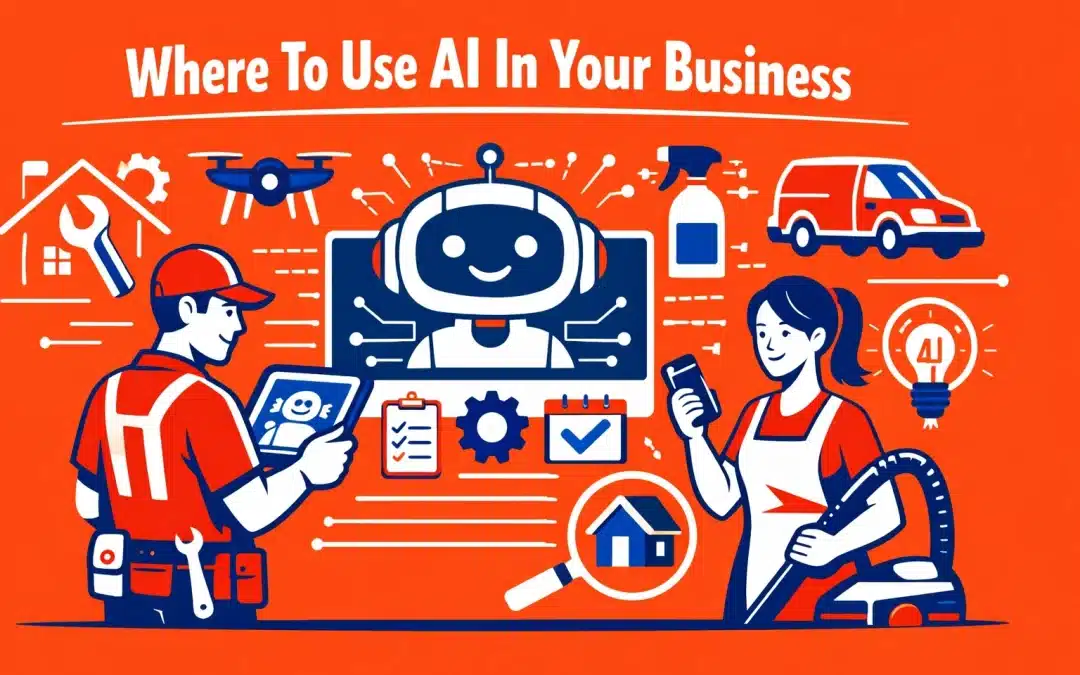
If you're a small or midsize business owner, you've probably heard the buzz about AI. But between the hype and the jargon, it's hard to know where it actually fits in your day-to-day operations.
The good news? You don't need a massive budget or a team of data scientists to put AI to work. The key is knowing where to deploy it for maximum impact. Here are five high-value areas where AI can save you time, improve your output, and ultimately boost your bottom line.
1. Selling & Communications
Your sales team spends hours drafting emails, following up with leads, and personalizing outreach. AI can handle the heavy lifting here: and do it faster than any human.
Sales email generation is one of the most practical applications. Tools powered by AI can analyze your prospect's industry, pain points, and buying stage, then generate personalized email copy in seconds. No more staring at a blank screen trying to find the right hook.
But it doesn't stop at emails. AI can help you:
- Write follow-up sequences that feel personal, not robotic
- Optimize subject lines for higher open rates
- Draft proposals and quotes based on your past successful deals
- Score leads so your team focuses on the hottest opportunities
The result? Your sales reps spend less time typing and more time closing. One retail company using AI-driven personalization saw conversion rates 3x the industry average: not because they hired more salespeople, but because every interaction was smarter and more relevant.
2. Content Creation
Content marketing is non-negotiable in 2026. But producing blogs, social posts, videos, and email newsletters week after week? That's exhausting.
AI is a game-changer here. It won't replace your brand voice, but it can accelerate the creation process and help you stay consistent.
Here's how businesses are using AI for content:
- Blog writing: Generate first drafts or outlines based on your topic and target keywords
- Social media posts: Create platform-specific captions, hashtags, and even image suggestions
- Video scripts: Turn a bullet-point list into a ready-to-film script
- Repurposing content: Take one blog post and turn it into 10 LinkedIn posts, an email newsletter, and a video outline
The beauty of AI-assisted content creation is that it handles the grunt work: research, structure, SEO optimization: while you focus on adding the human touch: your expertise, your stories, your unique perspective.
Pro tip: Use AI to create content templates. Once you have a winning format, you can churn out high-quality pieces faster than ever.
3. Customer Service
Your customers expect instant answers. But hiring enough staff to handle inquiries 24/7? That's expensive.
Enter AI-powered customer service. Chatbots and voice AI agents can handle routine questions, book appointments, and even resolve common issues: all without putting someone on hold.
Here's what modern AI customer service can do:
- Chatbots on your website that answer FAQs, direct customers to the right pages, and capture leads
- Voice AI agents that take phone calls, schedule appointments, and provide order updates (check out our Voice AI solutions to see this in action)
- Email auto-responders that intelligently categorize and route customer inquiries to the right department
- Sentiment analysis that flags unhappy customers so your team can intervene before a bad review hits
One pharmaceutical company automated tender document analysis in their CRM using AI, enabling faster and more accurate bidding. In customer service, speed and accuracy aren't just nice-to-haves: they directly impact satisfaction and retention.
The best part? AI doesn't get tired, doesn't take sick days, and scales instantly during busy periods.
4. Business Planning & Decision Making
Most small business owners make decisions based on gut instinct or last quarter's spreadsheet. That works: until it doesn't.
AI changes the game by turning your historical data into predictive intelligence. Instead of reacting to problems, you can anticipate them.
Here's where AI shines in business planning:
- Demand forecasting: Predict which products will sell, when, and how much inventory you'll need
- Financial modeling: Run "what-if" scenarios to see how pricing changes, new hires, or market shifts will impact your bottom line
- Risk detection: Spot early warning signs of cash flow problems, supplier delays, or customer churn
- Competitive analysis: Monitor competitor pricing, messaging, and market positioning in real time
One retail company used AI-enhanced inventory decisions to improve on-shelf availability by 8.8% and achieved an $18M+ working capital reduction. For a small business, even a fraction of that impact can mean the difference between a good year and a great one.
Think of AI as your always-on business advisor: one that never gets tired of crunching numbers and always gives you data-backed answers to your toughest questions.
5. Administrative Tasks
Let's be honest: admin work is a productivity killer. Templates, checklists, SOPs, workflows: these are essential, but they eat up hours you could spend growing your business.
AI can automate or accelerate almost every administrative task you dread.
Here are the big wins:
- Document generation: Create contracts, invoices, SOPs, and employee handbooks from templates in seconds
- Meeting summaries: AI transcribes and summarizes your meetings so you never have to take notes again
- Workflow automation: Set up triggers so tasks move automatically from one stage to the next (e.g., "When invoice is paid, send thank-you email and update CRM")
- Data entry: AI can extract information from PDFs, emails, or forms and populate your systems automatically
- Checklist creation: Generate onboarding checklists, project plans, or compliance audits tailored to your business
One company implemented AI-driven document validation in their electronic management system to ensure regulatory compliance: eliminating human error and freeing up their team to focus on higher-value work.
The ROI here is massive. If you're spending 10 hours a week on admin tasks, and AI cuts that in half, you've just bought yourself 260 hours a year to invest in growth.
The Bottom Line
AI isn't some distant, futuristic technology. It's here, it's accessible, and it's already delivering measurable results for businesses just like yours.
The key is to start small. Pick one area where you're feeling the most pain: whether that's sales outreach, content production, customer service, decision-making, or admin work: and test an AI solution. Once you see the ROI, scaling becomes a no-brainer.
If you're ready to explore how AI can transform your business, we're here to help. Schedule a consultation or call us at 703-864-2599 to discuss your specific needs.
The future of business isn't about working harder; it's about working smarter. And AI is your shortcut to getting there.
by George Stark | Jan 28, 2026 | AI
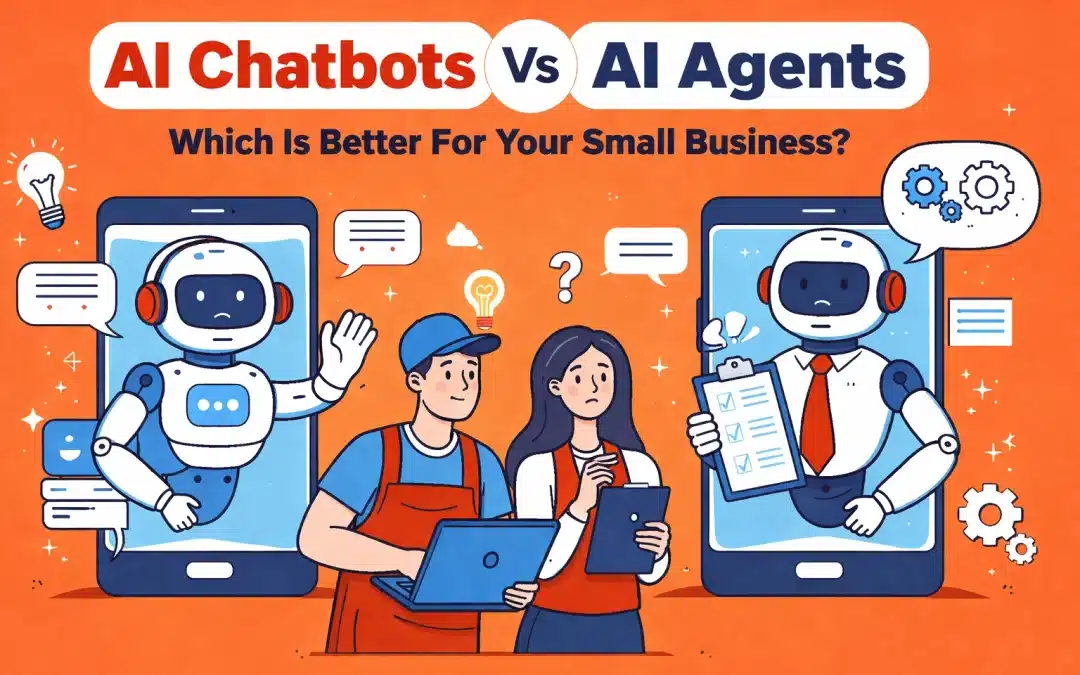
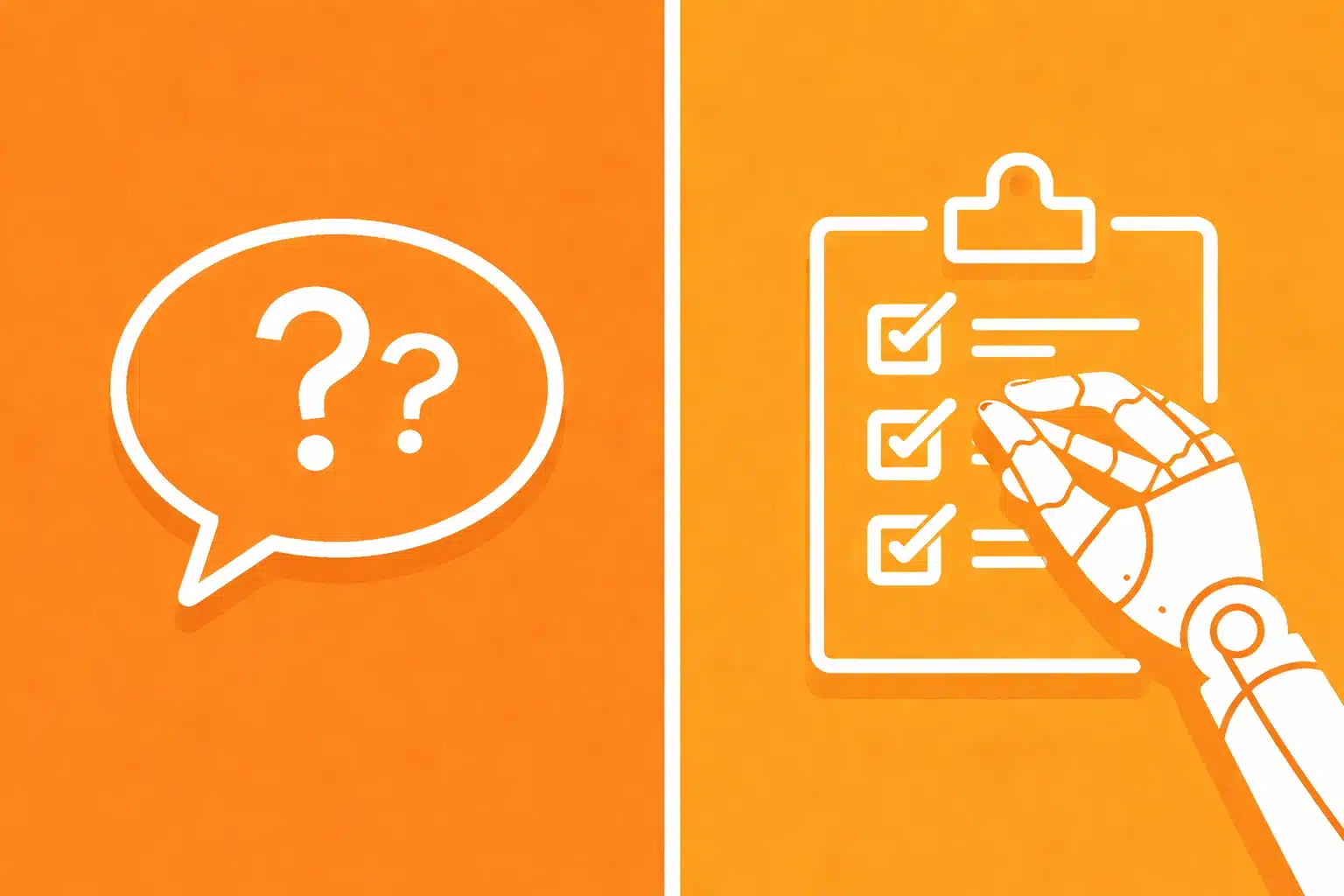
If you've been exploring ways to automate customer interactions or streamline operations, you've probably come across two terms: AI chatbots and AI agents. They sound similar, and many people use them interchangeably. But here's the thing, they're not the same, and choosing the wrong one could mean wasting money on a tool that doesn't actually solve your problems.
For small and midsize business owners, understanding the difference isn't just a technical exercise. It's about making a smart investment that delivers real results. Let's break down what each technology does, where they shine, and which one makes sense for your business.
What Is an AI Chatbot?
AI chatbots are the technology most people think of when they hear "automated customer service." These are the pop-up windows on websites that greet you with "Hi! How can I help you today?"
Most traditional chatbots are rule-based systems. They follow pre-programmed scripts and are designed to recognize keywords in your questions, then trigger matching responses. Think of them as a sophisticated FAQ system that can hold a basic conversation.
What Chatbots Do Well
- Answer common questions: Store hours, shipping policies, pricing information, return procedures
- Route inquiries: Direct customers to the right department or team member
- Provide instant responses: Handle high volumes of simple requests 24/7
- Reduce support tickets: Deflect repetitive questions away from your human staff
Chatbots are fast, consistent, and scalable. They excel at handling the same types of questions over and over without getting tired or making mistakes. For businesses drowning in repetitive customer inquiries, a well-designed chatbot can be a lifesaver.
The Limitations
Here's where chatbots fall short: they can only do what they're programmed to do. Ask a question outside their script, and you'll get the dreaded "I'm sorry, I didn't understand that. Can you rephrase?" response.
Chatbots don't learn from conversations. They don't adapt to new situations. And they definitely can't take action on your behalf: they just provide information and hope you figure out the next step yourself.
What Is an AI Agent?
AI agents represent the next evolution in business automation. Unlike chatbots that simply respond to questions, AI agents can actually complete tasks autonomously.
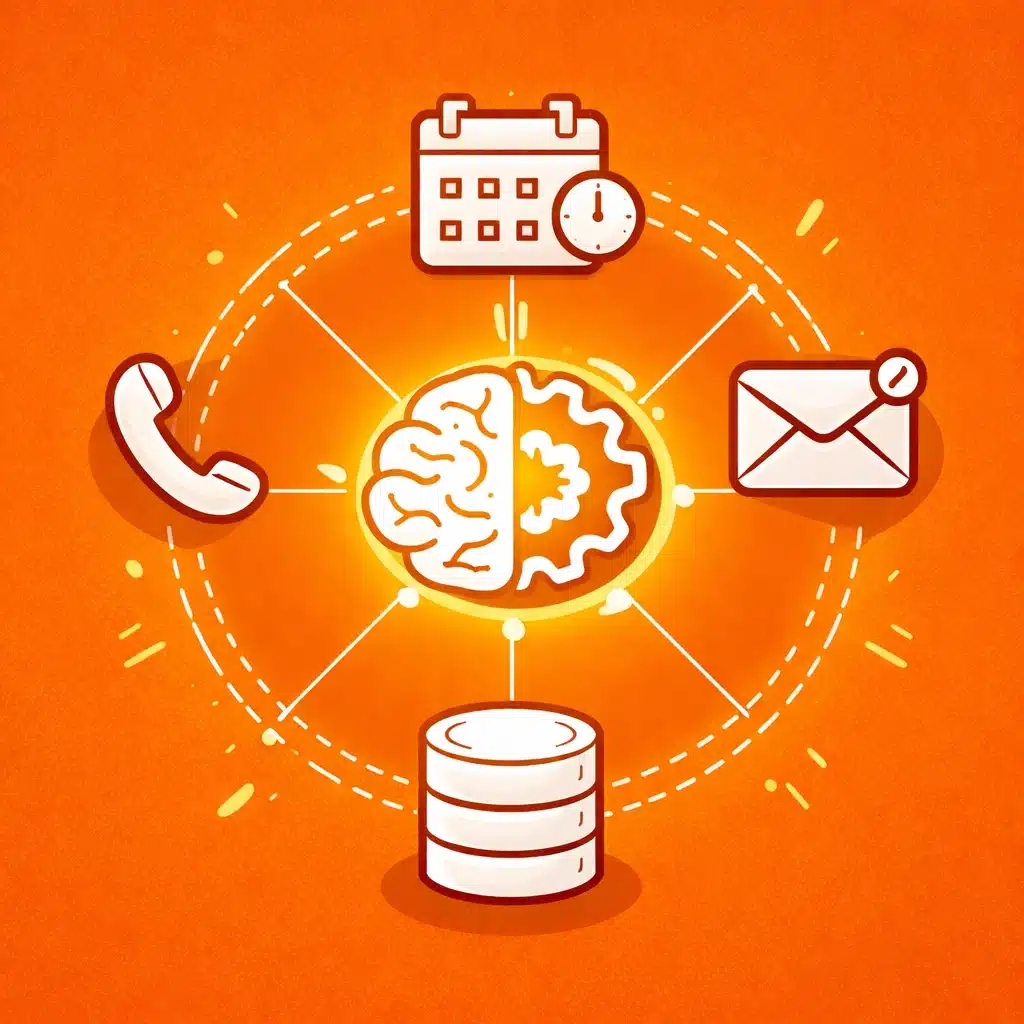
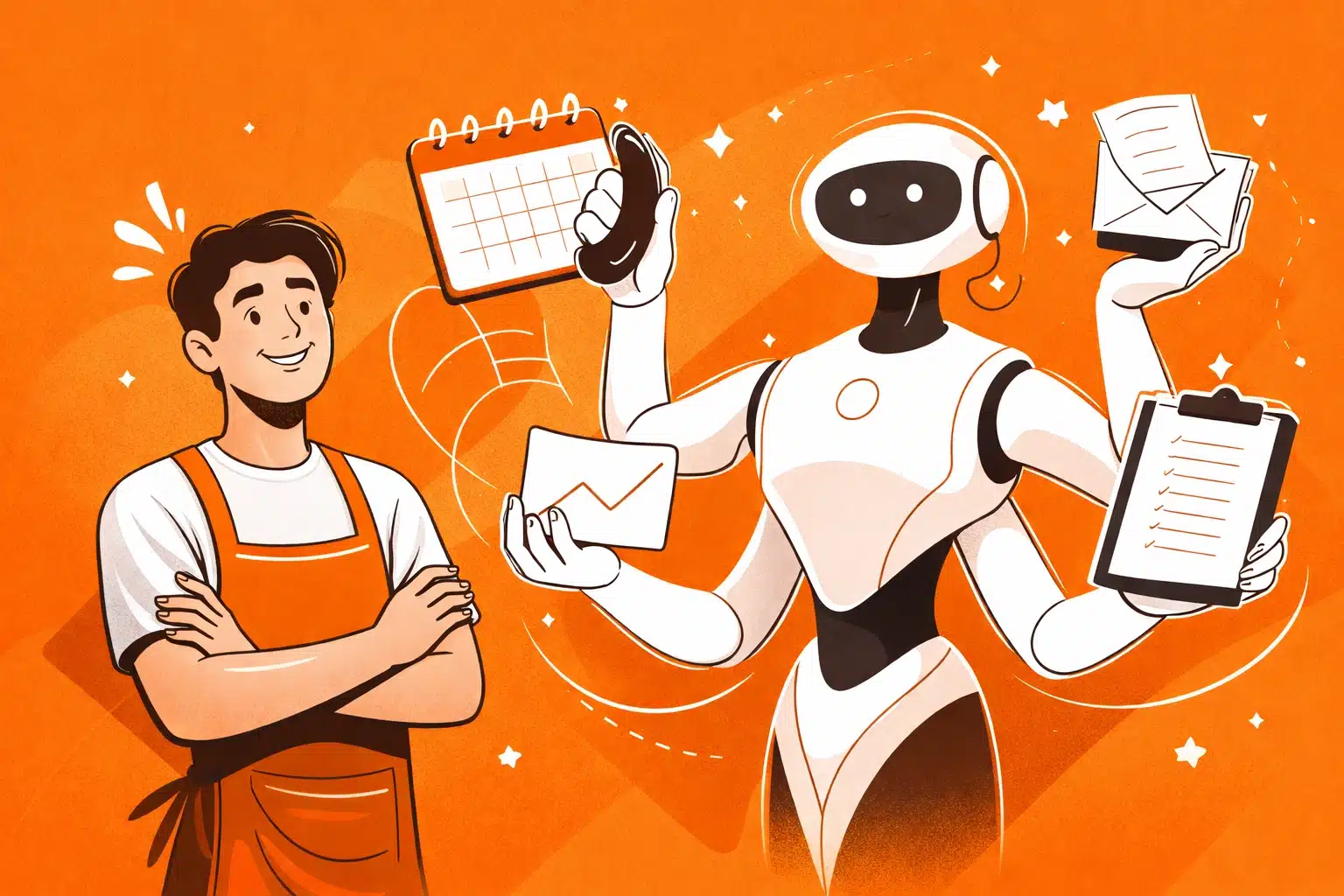
Think of the difference this way: a chatbot tells you how to schedule an appointment. An AI agent schedules the appointment for you: checking your calendar, finding available slots, sending confirmations, and updating your CRM, all without human intervention.
What AI Agents Do Well
- Execute multi-step workflows: Complete entire processes across multiple systems
- Make context-aware decisions: Analyze real-time data and adapt to changing situations
- Integrate across platforms: Connect your CRM, calendar, email, and other tools simultaneously
- Qualify and nurture leads: Engage prospects, gather information, and move them through your sales pipeline
- Handle complex requests: Resolve issues end-to-end rather than just answering questions
AI agents don't just respond: they resolve. They take ownership of a task and see it through to completion, much like a capable employee would.
The Investment
AI agents require more upfront planning and integration work than basic chatbots. They need to connect with your existing systems, understand your business processes, and be configured to make appropriate decisions. However, when implemented correctly, they can eliminate entire categories of manual work.
The Key Differences at a Glance
| Feature | AI Chatbot | AI Agent |
|---|
| Primary function | Answers questions | Completes tasks |
| Decision making | Follows scripts | Makes contextual decisions |
| System integration | Limited | Connects multiple platforms |
| Learning ability | Minimal | Adapts and improves |
| Best for | FAQs, routing, information | Workflows, automation, operations |
| Implementation | Faster, simpler | More complex, higher ROI |
When Should You Choose a Chatbot?
Chatbots remain an excellent choice for many small businesses, particularly those just starting with automation. Consider a chatbot if:
You need quick wins. Chatbots can be deployed relatively quickly with minimal technical complexity. If you're getting hammered with the same five questions every day, a chatbot can start deflecting those inquiries within weeks.
Your budget is limited. Basic chatbot solutions have a lower entry point, making them accessible for businesses testing the automation waters.
Your needs are straightforward. If most customer interactions involve providing information rather than taking action, a chatbot handles that efficiently.
You want to qualify leads at scale. Chatbots can ask initial qualifying questions and route promising prospects to your sales team, saving time on unqualified leads.
A local service business that receives dozens of calls asking "What are your hours?" or "Do you serve my area?" would benefit immediately from a simple chatbot that handles these questions automatically.
When Should You Choose an AI Agent?
AI agents deliver significantly higher returns when your business handles complex, interconnected workflows. Industry data shows enterprises implementing AI agents report 3–5x higher ROI compared to traditional chatbots. Consider an AI agent if:
You're losing deals to slow response times. AI agents can engage leads instantly, qualify them through intelligent conversation, and schedule appointments: all before a competitor even returns the call.
Manual tasks are eating your time. If your team spends hours on repetitive processes like appointment scheduling, follow-up sequences, or data entry, an AI agent can take over those workflows entirely.
You need integration across systems. AI agents shine when they can connect your calendar, CRM, email marketing platform, and other tools to complete tasks seamlessly.
You want to scale without hiring. For small businesses with limited staff, agents reduce the burden on your team by handling tasks end-to-end rather than just answering questions.
A growing home services company, for example, might use an AI agent that answers incoming calls, qualifies the lead by asking about the project scope, checks technician availability, books the appointment, sends a confirmation email, and creates a record in the CRM: all in one conversation, with zero human involvement.
The Hybrid Approach: Start Small, Scale Smart
Here's a practical strategy many successful small businesses follow: start with chatbots for customer-facing questions, then add agents for back-office operations as you grow.
This approach lets you capture immediate value from automation while building toward more sophisticated solutions. You'll learn what works, identify your biggest time-wasters, and make informed decisions about where AI agents can deliver the most impact.
For example, you might deploy a chatbot on your website to handle initial inquiries and FAQs. Once that's running smoothly, you introduce an AI agent to manage appointment scheduling and lead follow-up. Over time, you expand the agent's capabilities to include more complex workflows.
Making the Right Choice for Your Business
The best choice depends on your specific situation. Ask yourself:
- What problems am I trying to solve? Information delivery or task completion?
- How complex are my customer interactions? Simple Q&A or multi-step processes?
- What's my budget and timeline? Quick deployment or longer-term investment?
- Where is my team spending the most time? Answering questions or executing workflows?
The fundamental question isn't which technology is "better": it's which technology solves your actual problem.
How Web ABCs Can Help
At Web ABCs, we specialize in designing and developing both AI chatbots and AI agents tailored to small and midsize businesses. We don't believe in one-size-fits-all solutions. Instead, we work with you to understand your workflows, identify automation opportunities, and build tools that deliver measurable ROI.
Whether you need a straightforward chatbot to handle customer inquiries or a sophisticated AI agent to automate your lead qualification and scheduling processes, we can help you implement the right solution for your business goals.
Ready to explore what AI automation can do for your business? Give us a call at 703-864-2599 or schedule a free consultation to discuss your needs. We'd love to help you work smarter, not harder.
by George Stark | Jan 18, 2026 | AI
If you're a small or midsize business owner, you've probably heard a lot of buzz about AI lately. Maybe you've wondered if it's really worth the hype: or if it's just another tech trend that'll fizzle out.
Here's the truth: AI isn't going anywhere. In fact, it's becoming one of the most practical tools available to help businesses like yours save time, cut costs, and compete with the big players.
The good news? You don't need a tech degree or a massive budget to start using AI. There are simple, effective ways to integrate it into your daily operations right now.
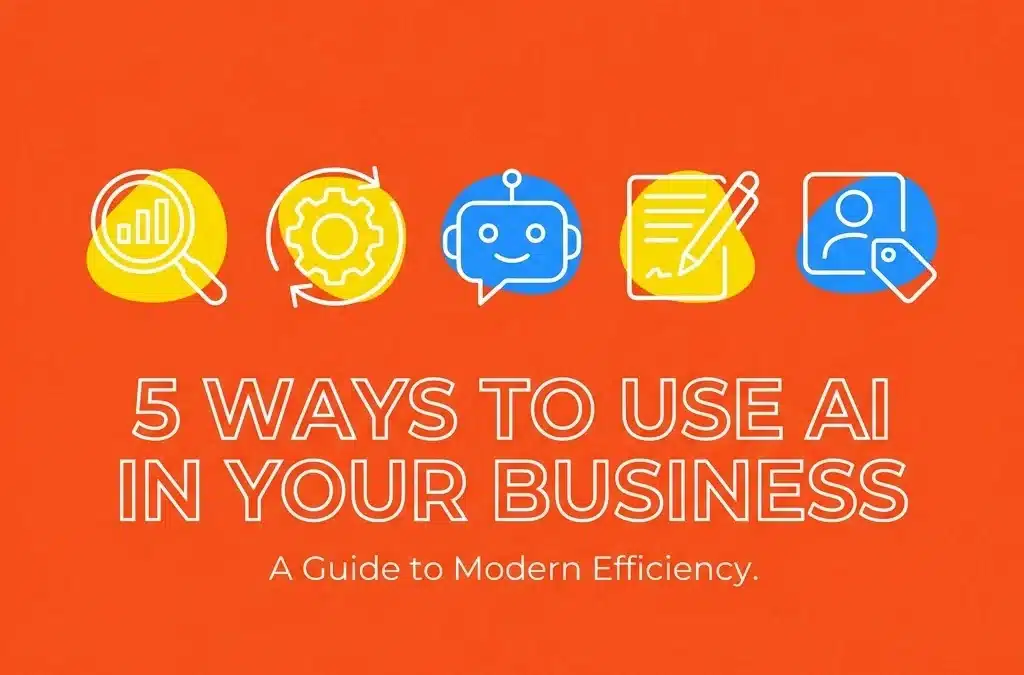
Let's break down five practical ways you can use AI in your business: starting today.
1. Selling & Communications
Let's start with the lifeblood of any business: sales and communication. Whether you're sending cold emails, following up with leads, or crafting personalized messages for existing customers, AI can be a game-changer.
Personalized Emails at Scale
One of the biggest challenges in sales is personalization. Generic emails get ignored. But crafting individual, tailored messages for every prospect? That takes forever.
AI tools can now analyze customer data and help you create personalized email content in seconds. We're talking about emails that reference a prospect's industry, pain points, or even recent company news: without you having to manually research each one.
Smarter Sales Messages
AI can also help you write compelling sales copy. Whether it's a LinkedIn message, a follow-up email, or a proposal, AI can suggest language that resonates with your audience. It learns what works and helps you refine your approach over time.
Why This Matters for Your Business
When your outreach feels personal and relevant, people respond. AI helps you maintain that personal touch: even when you're reaching out to hundreds of prospects. It's like having a sales assistant who never sleeps.
At Web ABCs, we help businesses leverage AI-powered communication strategies that drive real results. Because in 2026, smart selling isn't optional: it's essential.
2. Content Creation
If you've ever stared at a blank screen trying to come up with a blog post, social media caption, or newsletter, you know how time-consuming content creation can be.
AI is revolutionizing this process.
Social Media Made Simple
Coming up with fresh social media content every day is exhausting. AI tools can generate post ideas, write captions, and even suggest hashtags based on trending topics in your industry. You can plan a week's worth of content in an hour.
Blogs and Newsletters
Long-form content like blogs and newsletters used to require hours of research and writing. Now, AI can help you outline articles, draft sections, and even optimize your content for SEO. You still add your expertise and voice, but AI handles the heavy lifting.
Consistency Without Burnout
The key to content marketing is consistency. But most small business owners don't have time to post regularly. AI helps you maintain a steady content schedule without burning out.
Want to dive deeper into AI-powered content strategies? Check out our post on unlocking the future of content creation.
3. Customer Service & FAQs
Your customers expect fast answers. But you can't be available 24/7: and hiring a full customer service team might not be in the budget.
Enter AI-powered customer service.
Chatbots That Actually Help
Modern AI chatbots are nothing like the clunky bots of the past. They can understand natural language, answer complex questions, and guide customers through common issues. Whether it's tracking an order, explaining your services, or answering FAQs, chatbots handle it instantly.
24/7 Availability
One of the biggest advantages of AI customer service is availability. Your chatbot doesn't take breaks, doesn't call in sick, and doesn't need weekends off. Customers get answers whenever they need them: even at 2 AM.
Free Up Your Team
When AI handles routine inquiries, your human team can focus on the complex issues that actually require a personal touch. This means faster resolution times for tricky problems and happier customers overall.
Curious about how AI agents compare to human employees? We break it down in our article on AI agents vs. human employees.
4. Business Planning & Decision Making
Running a business means making decisions every day. Some are small; some can make or break your company. AI can help you make smarter choices: faster.
Data-Driven Insights
AI-powered analytics tools can sift through mountains of data and surface the insights that matter. Instead of spending hours in spreadsheets, you get clear, actionable information at a glance. What products are selling best? Where are customers dropping off? What marketing channels are delivering ROI?
Forecasting and Trends
AI excels at spotting patterns humans might miss. It can help you forecast demand, predict market trends, and plan inventory more accurately. This means fewer surprises and more strategic growth.
Strategic Planning Support
Whether you're planning a new product launch, entering a new market, or adjusting your pricing strategy, AI can provide data-backed recommendations. It's like having a business analyst on call: without the hefty salary.
Small businesses using AI for decision-making are already outpacing competitors. Don't get left behind. Learn more about why 2026 is the year small businesses will out-compete giants with AI.
5. Administrative Tasks
Let's be honest: administrative work is necessary, but it's rarely the best use of your time. AI can take a lot of that busywork off your plate.
Checklists and Templates
Need a project checklist? An onboarding template? A meeting agenda? AI can generate these in seconds, customized to your specific needs. No more starting from scratch every time.
Data Organization
If your business runs on data: customer lists, inventory records, financial reports: AI can help you organize and manage it more efficiently. It can clean up messy spreadsheets, categorize information, and even flag errors or duplicates.
Scheduling and Reminders
AI-powered scheduling tools can manage your calendar, set reminders, and even coordinate meetings with clients or team members. Less time juggling logistics means more time focused on growing your business.
The Productivity Payoff
Studies show that businesses using AI for administrative tasks report significantly higher productivity. When you're not bogged down by paperwork and data entry, you can focus on what actually moves the needle.
Ready to Start Using AI in Your Business?
AI isn't just for tech giants and Fortune 500 companies anymore. It's accessible, affordable, and incredibly practical for small and midsize businesses.
Whether you're looking to streamline sales, create better content, improve customer service, make smarter decisions, or just get through your to-do list faster: AI can help.
At Web ABCs, we specialize in helping businesses like yours harness the power of AI and digital marketing. We'll help you identify the right tools, implement them effectively, and see real results.
Ready to see what AI can do for your business? Schedule a free consultation or give us a call at 703-864-2599. Let's build something great together.


 results.](https://cdn.marblism.com/EAOJRsYInIw.webp))
)
 synthesizing web content into a direct AI answer.](https://cdn.marblism.com/Bkhf0pya-SX.webp))
)